19 Small Dream House Ideas That Feel Warm and Beautiful
Small dream house ideas can feel just as memorable as large dream homes. A compact house becomes special when the exterior, natural light, storage, furniture, and everyday layout work together.
The prettiest small homes do not try to hide their size. They make every square foot feel thoughtful, comfortable, and easy to use.
A welcoming porch, connected color palette, clear walkways, and a few natural textures can create a home that feels personal rather than limited.
For a broader foundation, begin with the dream house ideas guide.
1. Start With a Clear Feeling
Before choosing siding, furniture, or decor, decide how the home should feel.
A small dream house might have a gentle cottage mood, a clean modern look, farmhouse warmth, or a simple natural style. One clear direction helps the exterior and interior feel connected.
The roofline, windows, door, flooring, lighting, and materials should support the same visual story.
A small home feels calmer when each room belongs to the same house rather than following a completely different style.
2. Choose a Simple Exterior Shape
Compact houses often look best with a clean, balanced form.
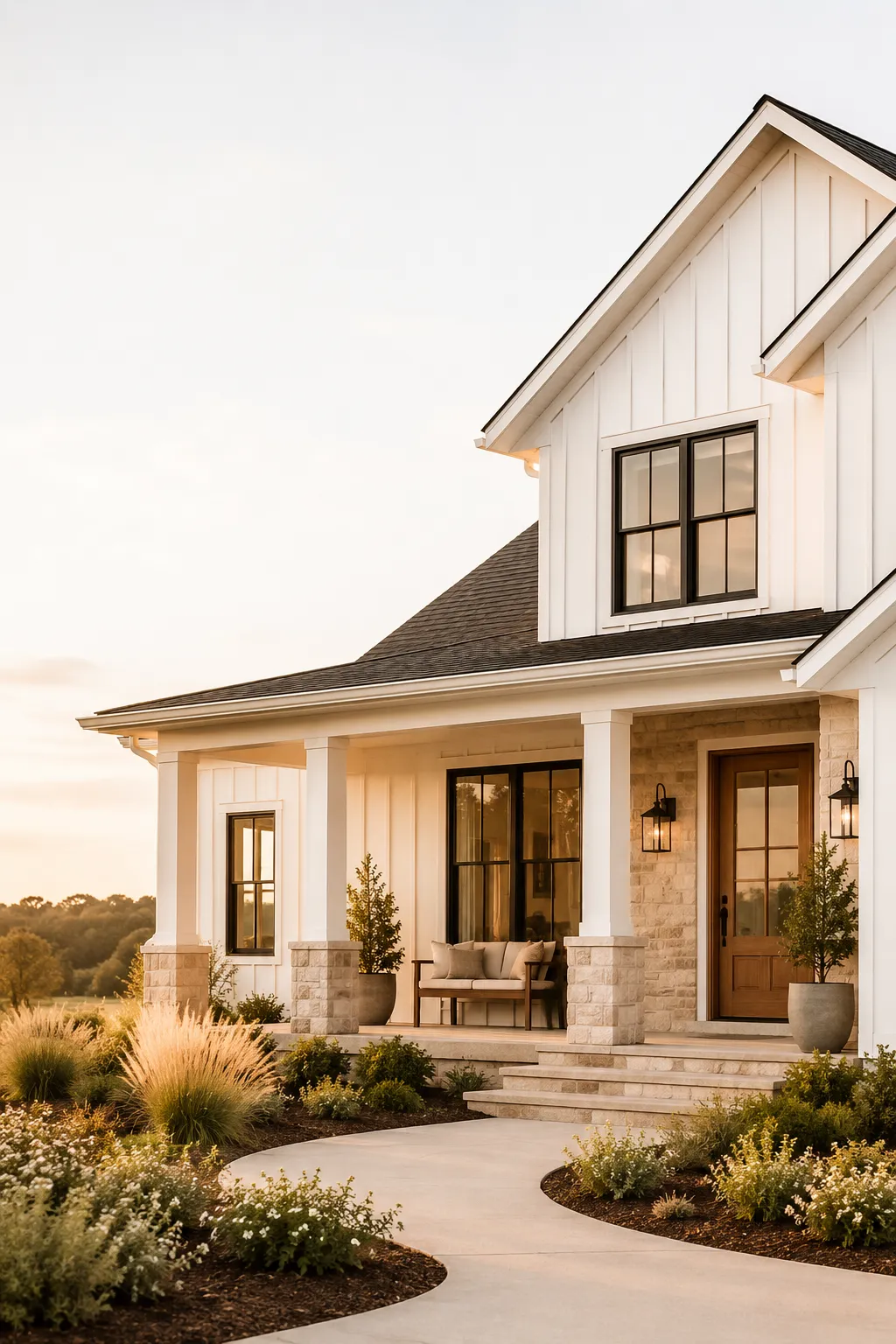
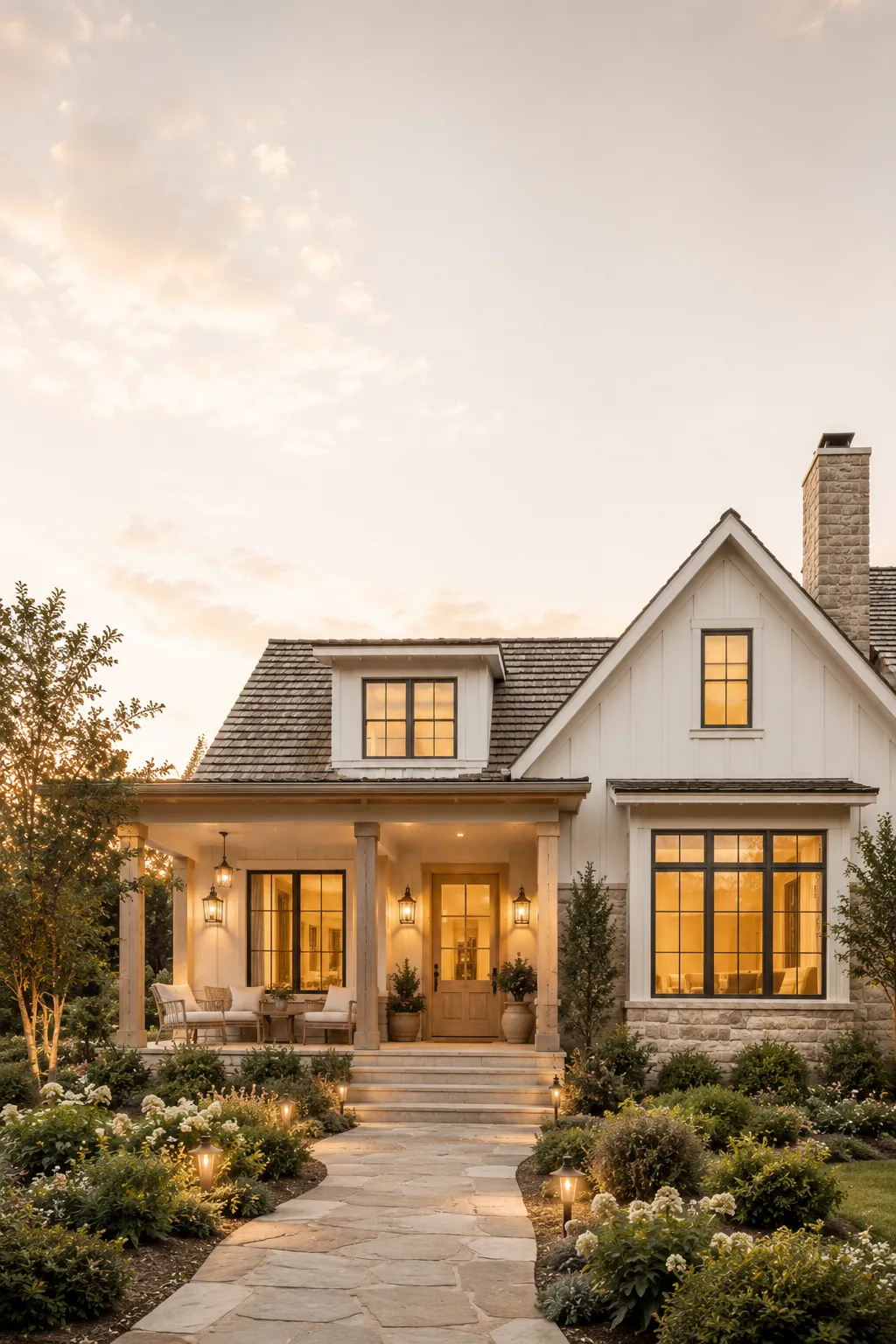
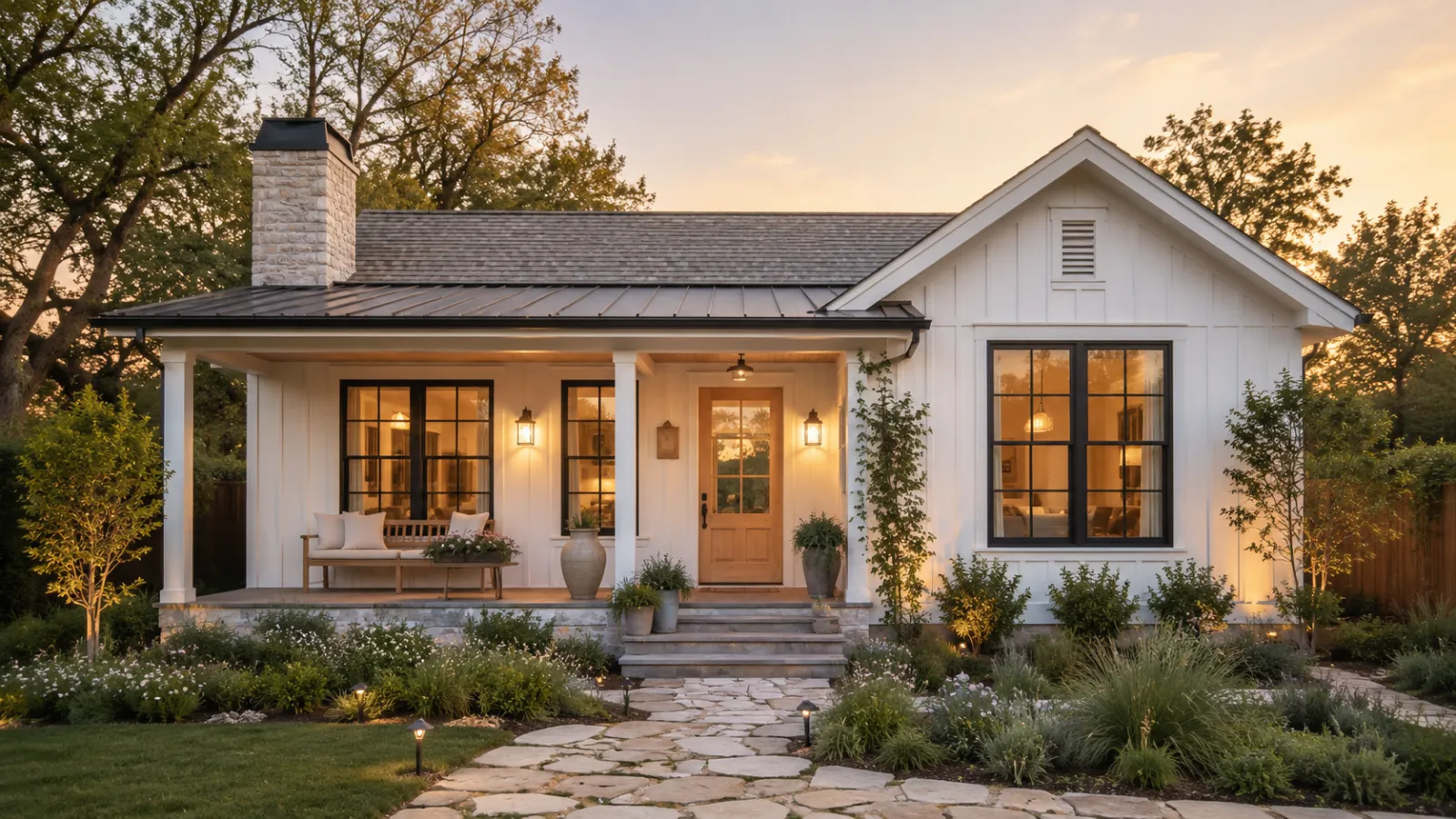
A cottage profile, simple modern rectangle, small cabin shape, or classic farmhouse outline can all work beautifully. Too many rooflines, materials, and decorative details may make a smaller facade feel busy.
The goal is not to make the house appear larger. A balanced shape makes its true size feel intentional.
For more porch, path, material, and landscaping inspiration, see the dream house exterior ideas guide.
3. Use a Connected Exterior Palette
Warm white, cream, beige, greige, muted sage, soft taupe, and light clay can make a small exterior feel calm and welcoming.
Keep the palette simple:
- one main siding color
- one trim color
- one darker or natural accent
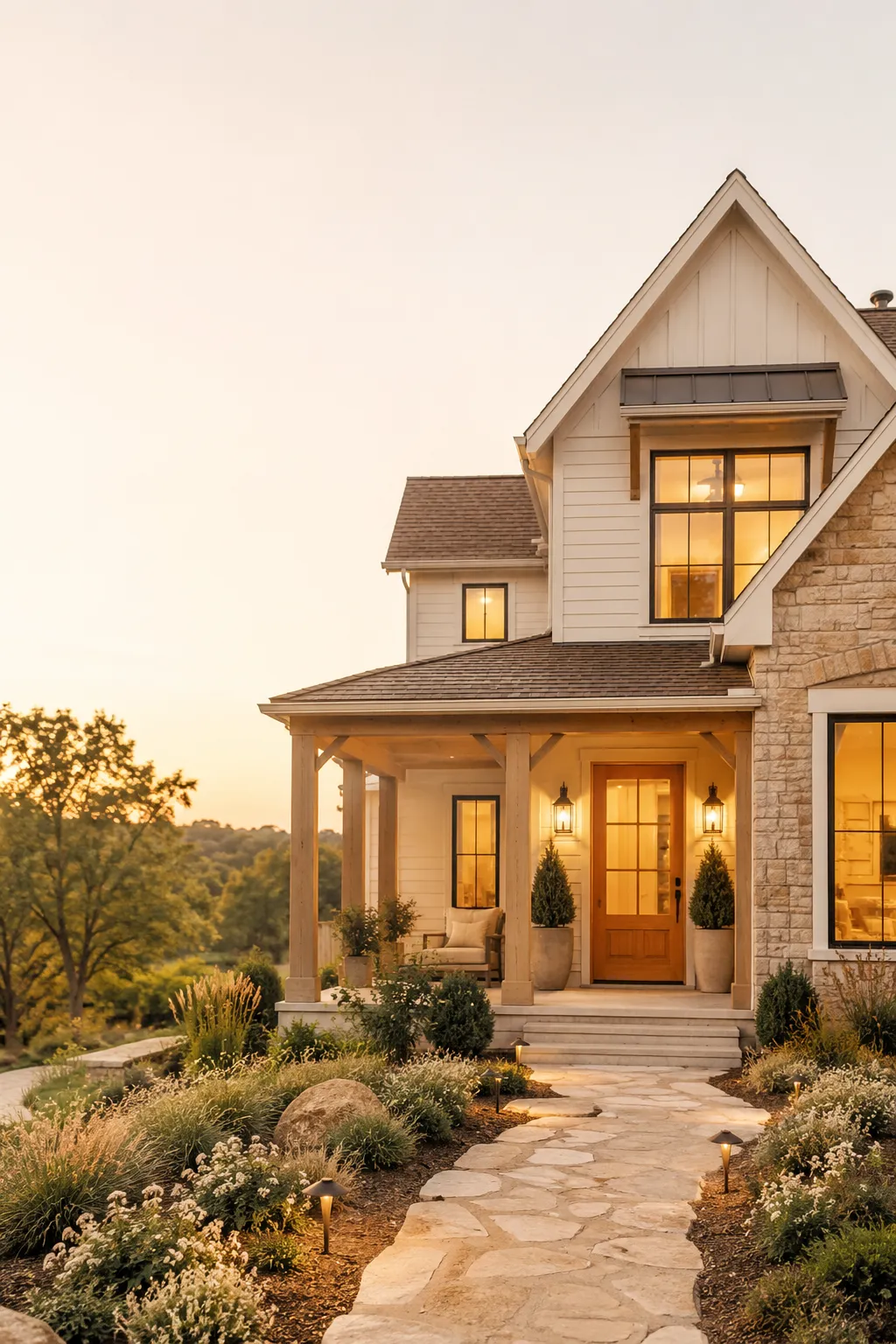
Warm white siding, pale stone, a wood door, and black window frames create contrast without covering the facade in competing colors.
Before committing, test a large paint sample on more than one side of the house. Sunlight, shade, roofing, stone, and nearby greenery can change how the color appears throughout the day.
For a tangible starting point, consider a warm white similar to Benjamin Moore White Dove OC-17 or Sherwin-Williams Alabaster SW 7008. A soft greige such as Sherwin-Williams Accessible Beige SW 7036 can work as a supporting neutral. Pair it with natural or white oak and one restrained metal finish, such as aged brass or matte black.
4. Add a Small but Useful Porch
A compact porch can give a small dream home a stronger sense of arrival.
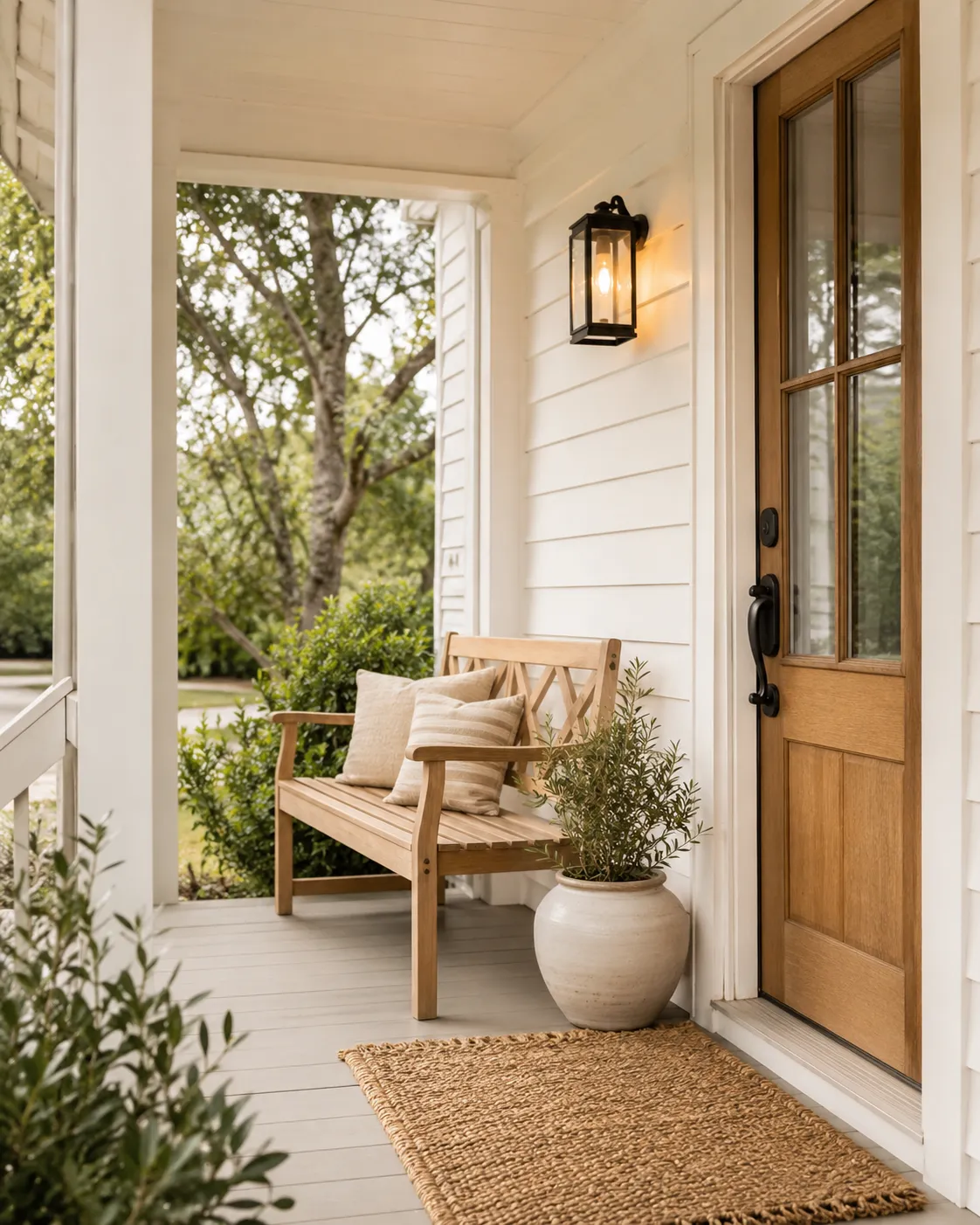
One slim chair, a wood bench, a natural doormat, a large planter, and a warm wall lantern may be enough. A lightweight wreath can add softness without filling the entry.
Keep the path to the door completely clear. Several tiny accessories usually create more clutter than one or two larger pieces.
Seasonal details can be added later through the fall decor ideas guide without changing the main porch design.
5. Let Natural Light Work Hard
Natural light can make compact rooms feel more open and comfortable.
Place windows where daylight can move through the main living areas. Glass doors, interior sightlines, and lighter window treatments can also help rooms feel connected.
The Energy.gov daylighting guide explains how windows and skylights bring sunlight into a home. For real planning, the ENERGY STAR residential windows, doors, and skylights guide is useful when comparing efficient products.
The best window plan balances daylight, privacy, furniture placement, climate, and the view outside.
6. Make the Entryway Useful
A small entryway should welcome people in while controlling everyday clutter.
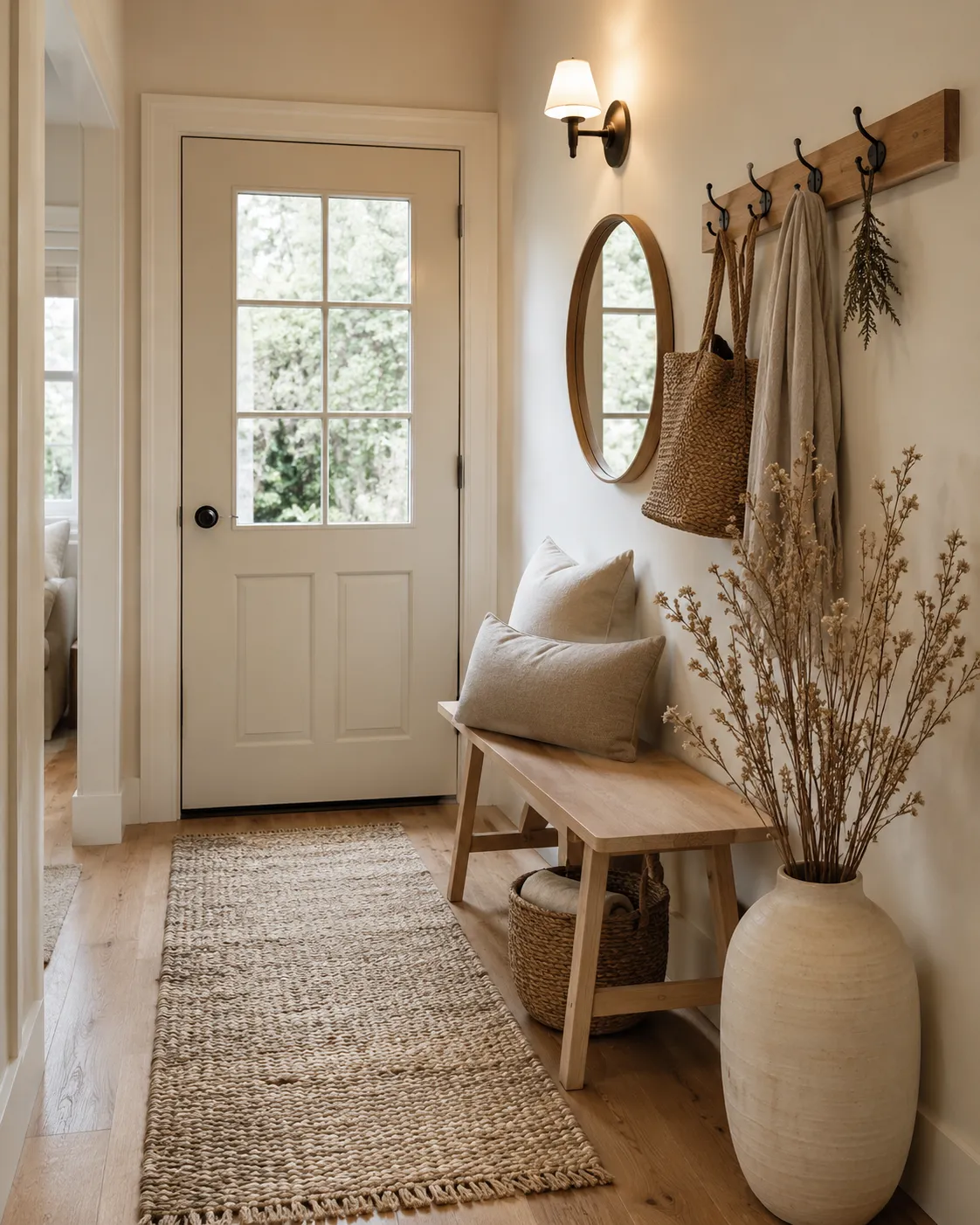
A slim bench, wall hooks, small mirror, washable rug, and one basket can provide enough function without blocking the doorway.
Use closed storage for shoes and loose items when possible. A mirror can reflect daylight, while hooks keep bags and jackets off the floor.
In a rental, removable hooks, a leaning mirror, and freestanding baskets can create the same function without permanent changes.
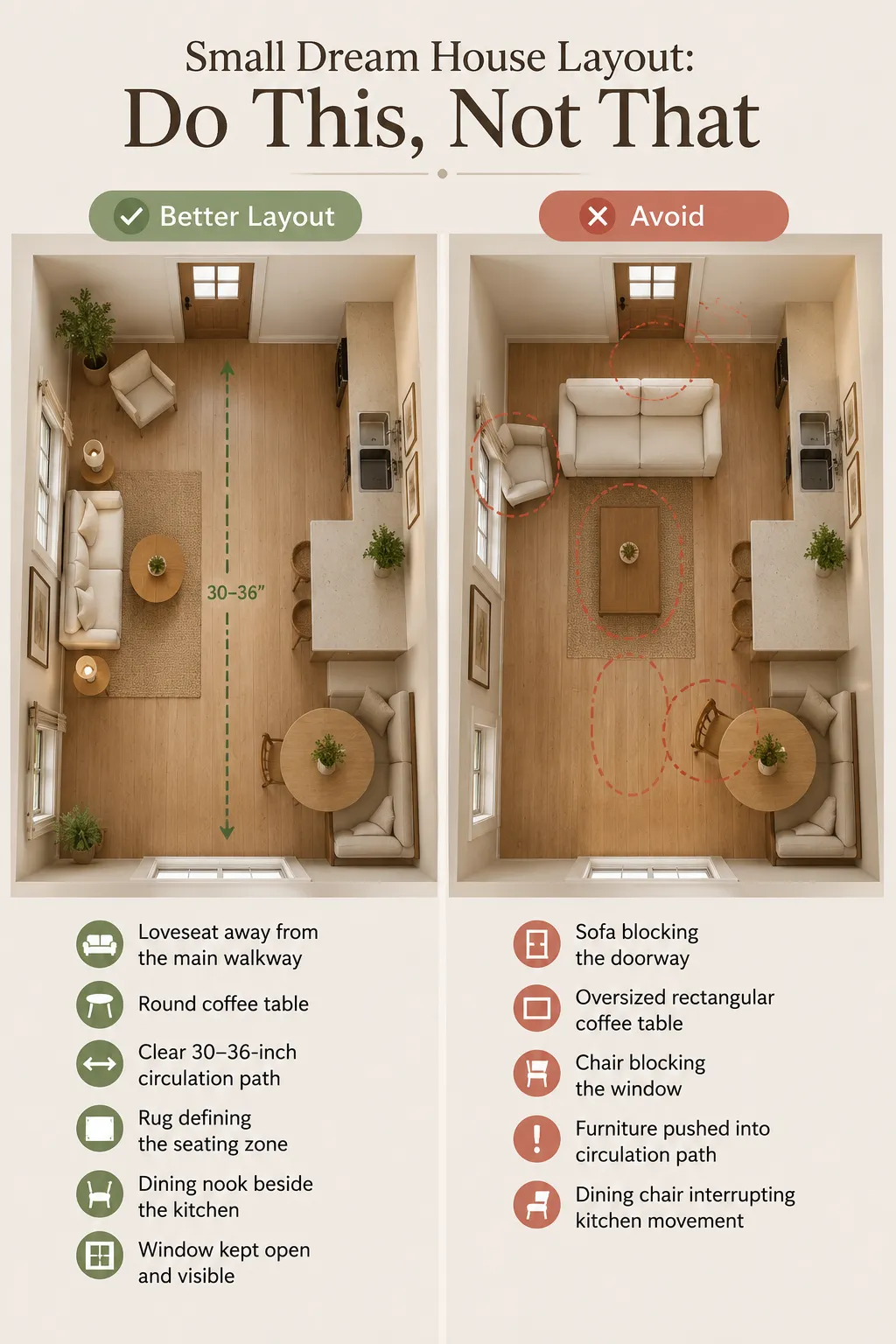
7. Keep the Floor Plan Connected
A small dream home does not need one completely open room. It needs spaces that relate naturally.
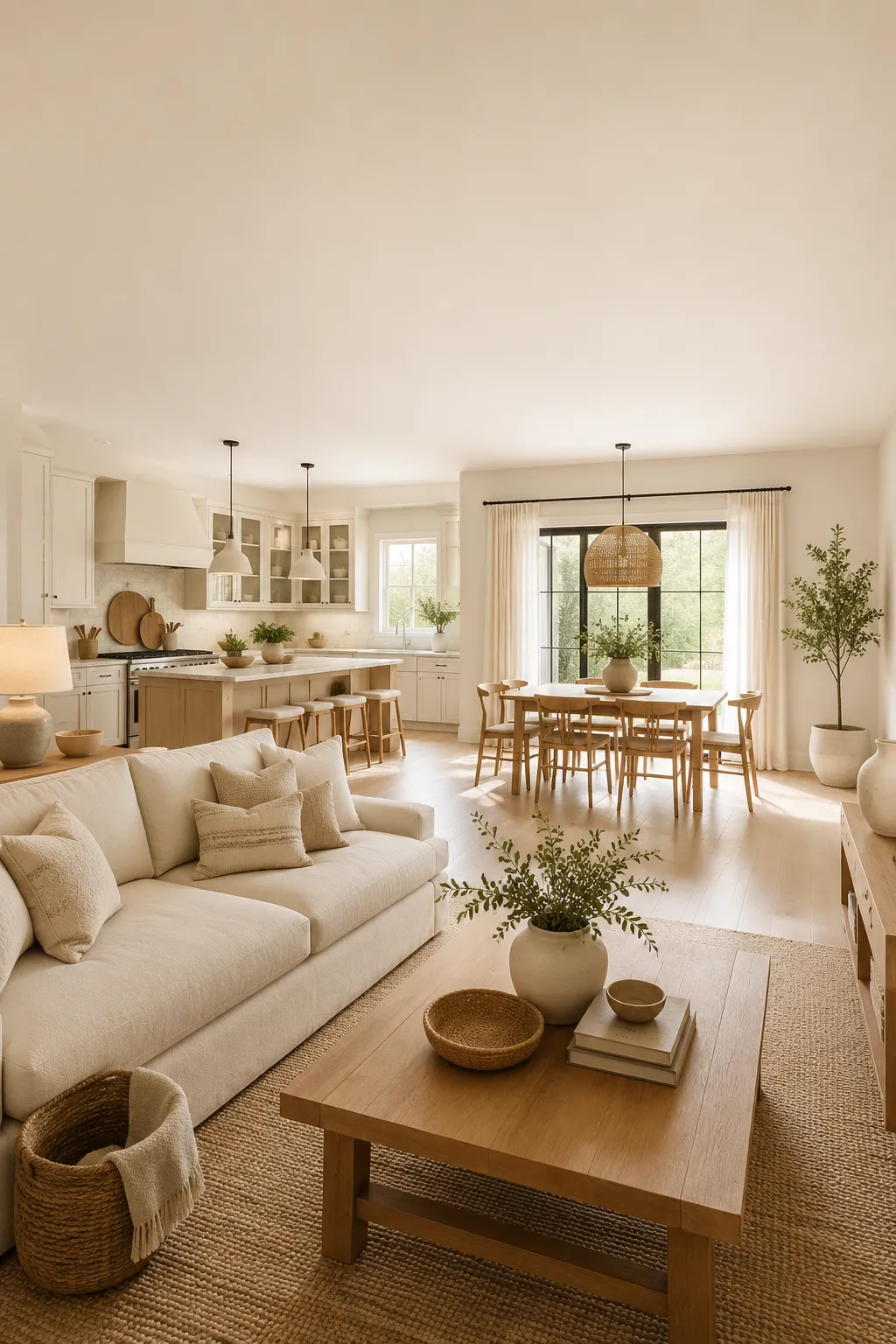
Repeating the flooring, wall color, and wood tone can connect the kitchen, dining area, and living room. Rugs, pendant lights, and furniture placement can then create smaller zones.
Keep the main walkways clear and avoid placing furniture where it interrupts movement between rooms.
As a practical starting point, aim for about 30–36 inches of clear space along the main circulation path where the room allows. Smaller secondary gaps may work, but doors, drawers, and chairs should open without interrupting movement.
The small cozy living room ideas guide has more compact layout inspiration.
8. Build Storage Into the Architecture
Built-in storage can make a small house feel custom and organized.
Useful options include:
- a window seat with drawers
- shelves beside a fireplace
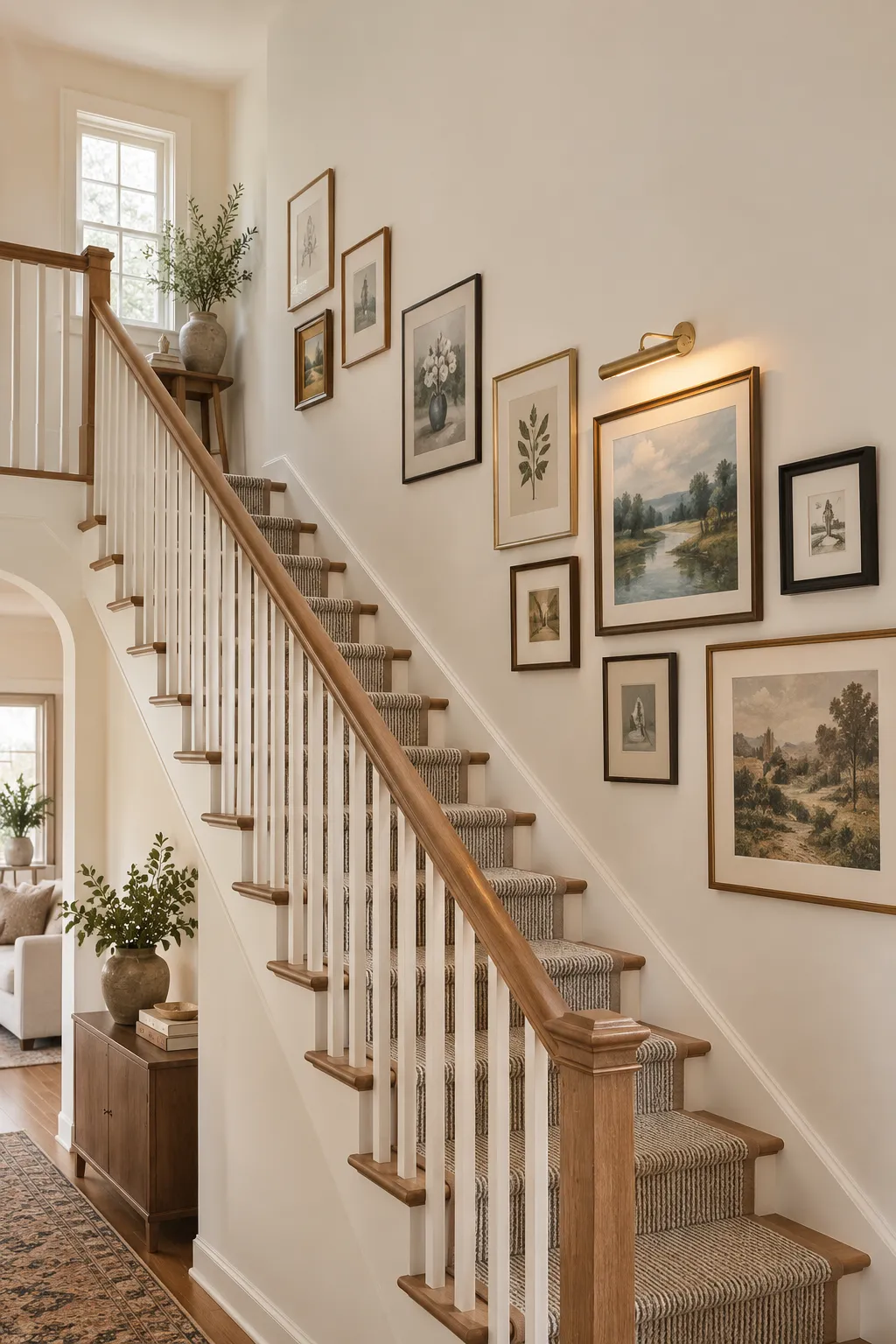
- under-stair storage
- entry cabinets
- a built-in dining bench
- wall-to-wall bedroom storage
Closed cabinets hide visual clutter, while a small amount of open shelving keeps the room from feeling heavy.
Storage should be planned before decorative accessories. A beautiful room becomes difficult to enjoy when everyday items have nowhere to go.
9. Choose Furniture With Light Visual Weight
Oversized furniture can make a compact room difficult to move through.
Look for slim arms, visible legs, rounded edges, light wood, and lower profiles. A loveseat may suit the room better than a deep sectional. A round dining table can also make circulation easier than a wide rectangular table.
Measure doorways, walkways, and the available floor area before purchasing.
Before buying, mark the furniture footprint on the floor with painter’s tape. Around 16–18 inches between a sofa and coffee table often keeps the table useful without making the seating area feel tight. These measurements are starting points and should be adjusted to the room and household.
Comfort still matters. Small furniture should fit the room without feeling temporary or uncomfortable.
10. Layer the Lighting
One ceiling fixture rarely creates a comfortable small home.
Combine overhead lighting with table lamps, floor lamps, sconces, under-cabinet lights, or shelf lighting. This allows each room to feel brighter without one harsh light dominating the space.
For living rooms, bedrooms, and quiet corners, warm-white LEDs around 2700K–3000K usually create a softer glow beside cream walls, light wood, linen, and stone. Use dimmers where possible so the same room can feel brighter during tasks and calmer at night.
The Energy.gov LED lighting guide can help when comparing LED options. The warm living room ideas guide also includes ways to create a gentler evening mood.
11. Use Vertical Space Carefully
Walls can provide useful storage without taking up more floor area.
Try tall shelving, wall hooks, narrow cabinets, wall-mounted lighting, high curtain rods, or simple vertical paneling.
Keep the upper part of the room visually light. Filling every wall from floor to ceiling can make a compact home feel crowded.
In rental spaces, use freestanding ladder shelves, removable hooks, or a tall leaning mirror instead of permanent built-ins.
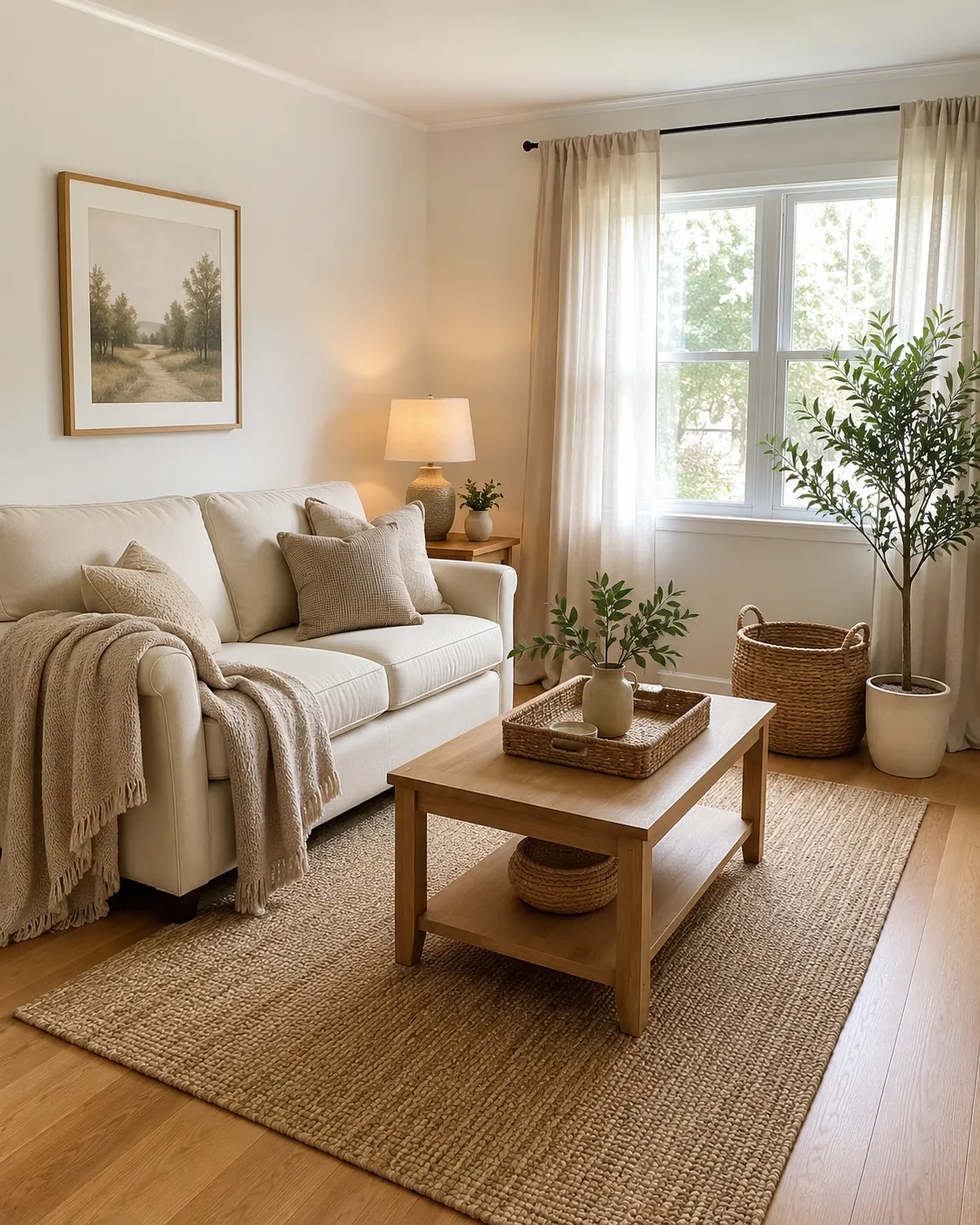
12. Create a Comfortable Small Living Room
A compact living room can still feel like the heart of the house.
A cream loveseat, connected neutral rug, light wood table, warm lamp, and woven basket create a calm foundation. Two or three pillows are usually enough.
Keep the coffee table useful. A tray, small vase, and one decorative object leave room for drinks, books, or daily activities.
For a complete styling guide, see the cozy living room ideas post.
13. Keep the Kitchen Bright and Practical
A small kitchen feels more beautiful when it works efficiently.
Warm-white cabinets, light wood, simple hardware, soft stone counters, and under-cabinet lighting can keep the space bright. Leave the main preparation area clear instead of filling every surface with decor.
Open shelving works best when it holds a limited number of everyday pieces in connected colors.
A small kitchen should feel useful first. Its beauty comes from clean surfaces, thoughtful storage, and materials that age well.
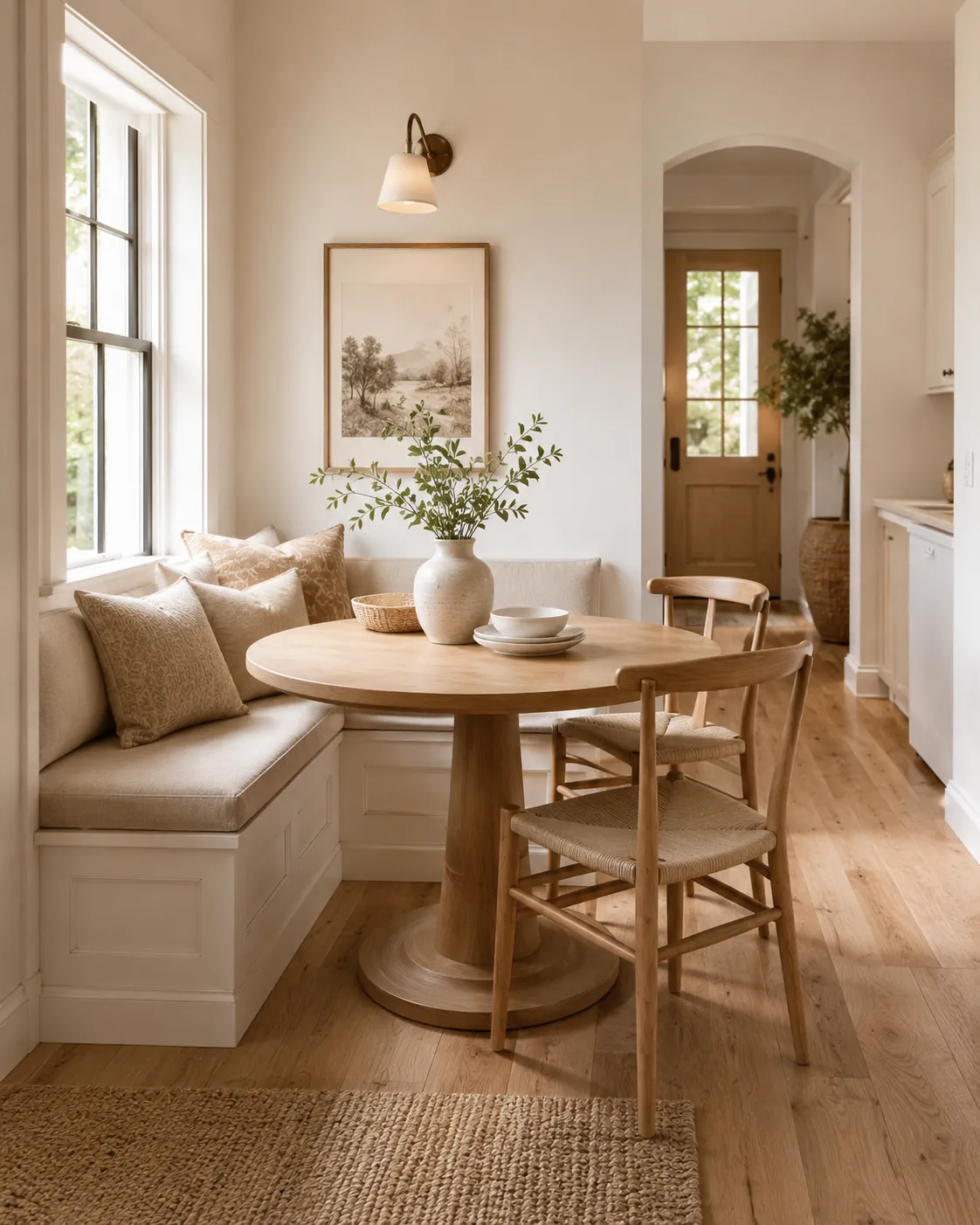
14. Add a Compact Dining Nook
A dining nook can turn an unused corner into a place for meals, reading, homework, or coffee.
Use a small round table, built-in bench, slim chairs, washable cushions, and one pendant light. A pedestal table can provide more legroom than a table with four corner legs.
Storage drawers beneath the bench can hold linens, board games, or seasonal items.
Check how far the chairs or bench extend when someone is seated. Where possible, preserve roughly 30–36 inches along the main approach so the nook does not block the kitchen or nearby doorway.
The finished nook should feel easy to sit in, not tightly packed around oversized furniture.
15. Keep the Bedroom Restful
A small bedroom benefits from fewer pieces and calmer surfaces.
Choose warm-white bedding, a light wood bed, compact nightstand, wall-mounted light, neutral rug, and one meaningful artwork.
Under-bed drawers, a storage bed, or a tall wardrobe can reduce the need for extra furniture.
Leave some wall and floor space visible. The room should feel restful before it feels decorated.
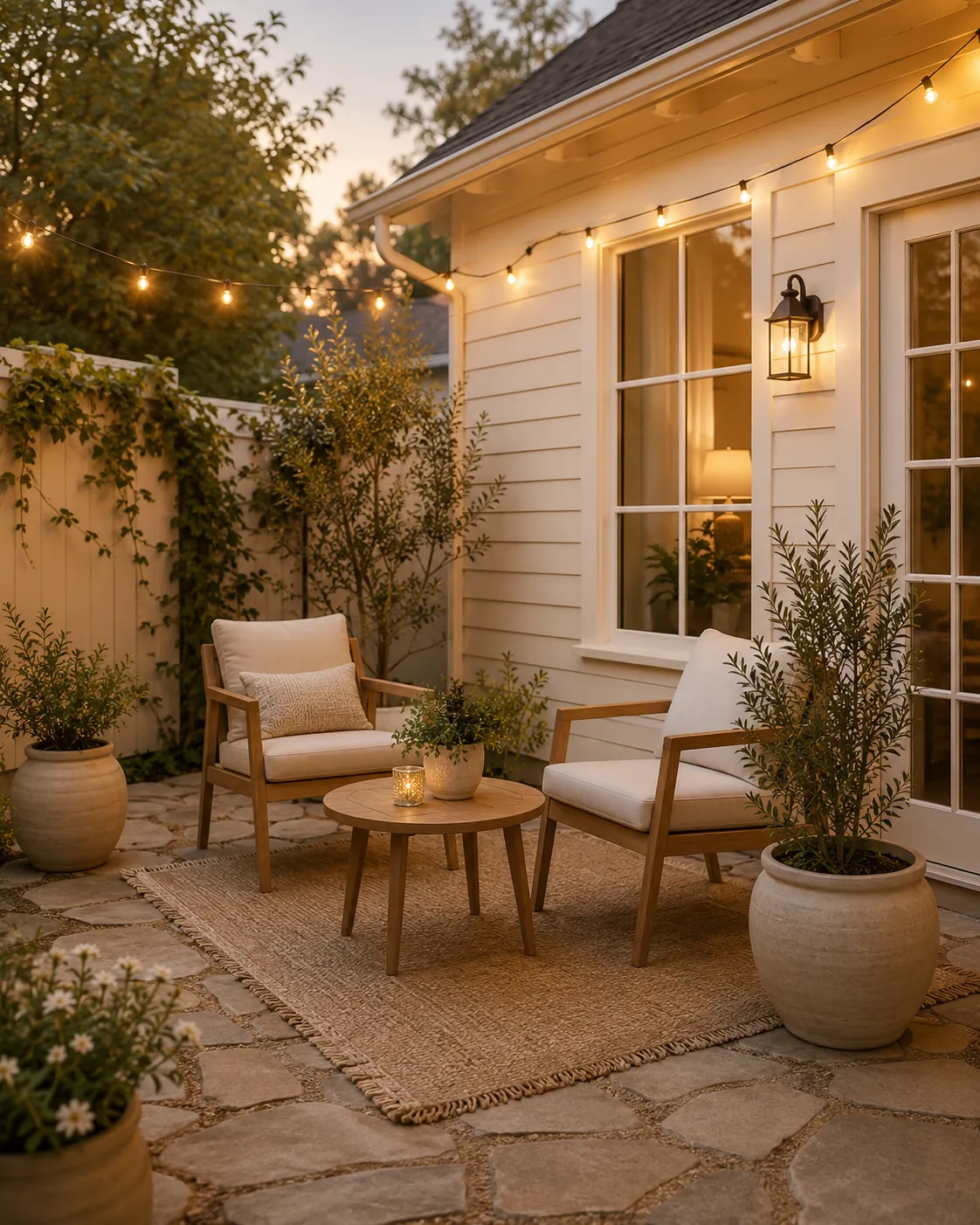
16. Treat Outdoor Space Like Another Room
A small porch, patio, balcony, or garden corner can expand how the home is used.
One small table, two chairs, a planter, warm outdoor light, and a neutral rug may create enough space for morning coffee or evening conversation.
Choose weather-appropriate materials and keep the walking area open.
Even a short garden path or tiny seating corner can make a compact house feel more complete.
17. Balance Modern Lines With Natural Details
A small house can feel modern without becoming cold.
Pair clean shapes with warm wood, pale stone, linen, muted greenery, and gentle lighting. Black-framed windows can add definition, while a wood door keeps the exterior from feeling sharp.
Repeat one or two materials rather than introducing a new finish in every room.
The modern dream house ideas guide shows more ways to combine simple architecture with comfortable details.
18. Keep the Decor Light and Personal
Small homes can become cluttered quickly when every surface is decorated.
Choose a few pieces with meaning: a framed print, ceramic vase, woven basket, soft throw, or healthy plant. Repeat colors and materials across rooms so the home feels connected.
The aesthetic home decor ideas category has more inspiration for creating a personal look without filling every shelf.
The room should support everyday life, not require constant rearranging.
19. Make It Feel Beautiful, Not Big
A small dream house does not need to pretend it has more space.
Natural light, clear movement, good storage, comfortable furniture, and a connected palette matter more than size. When these foundations work, a compact home can feel calm and refined.
Start with the changes that solve real problems. Storage, lighting, layout, and durable furniture should come before decorative accessories.
The best small homes feel honest, useful, and quietly beautiful.
Common Small Dream House Mistakes
Choosing furniture before measuring
A beautiful sofa or dining table can still be wrong for the room. Measure the furniture, doors, pathways, and surrounding clearance before purchasing.
Using too many colors and materials
Several wood tones, metals, stones, and accent colors can make a small home feel disconnected. Choose a simple base and repeat it throughout the house.
Keeping too much storage open
Open shelves can look attractive, but they also expose everyday clutter. Combine a little open display space with closed cabinets, drawers, and baskets.
Blocking windows and walkways
Tall furniture in front of a window reduces daylight. Oversized pieces near doors or passages make the home harder to use.
Decorating before solving storage
Adding pillows, baskets, and accessories does not fix a lack of practical storage. Give daily items a clear home first.
Ignoring the outdoor area
Even a tiny porch or patio can support daily life. Leaving it unused may make the entire property feel smaller than it needs to.
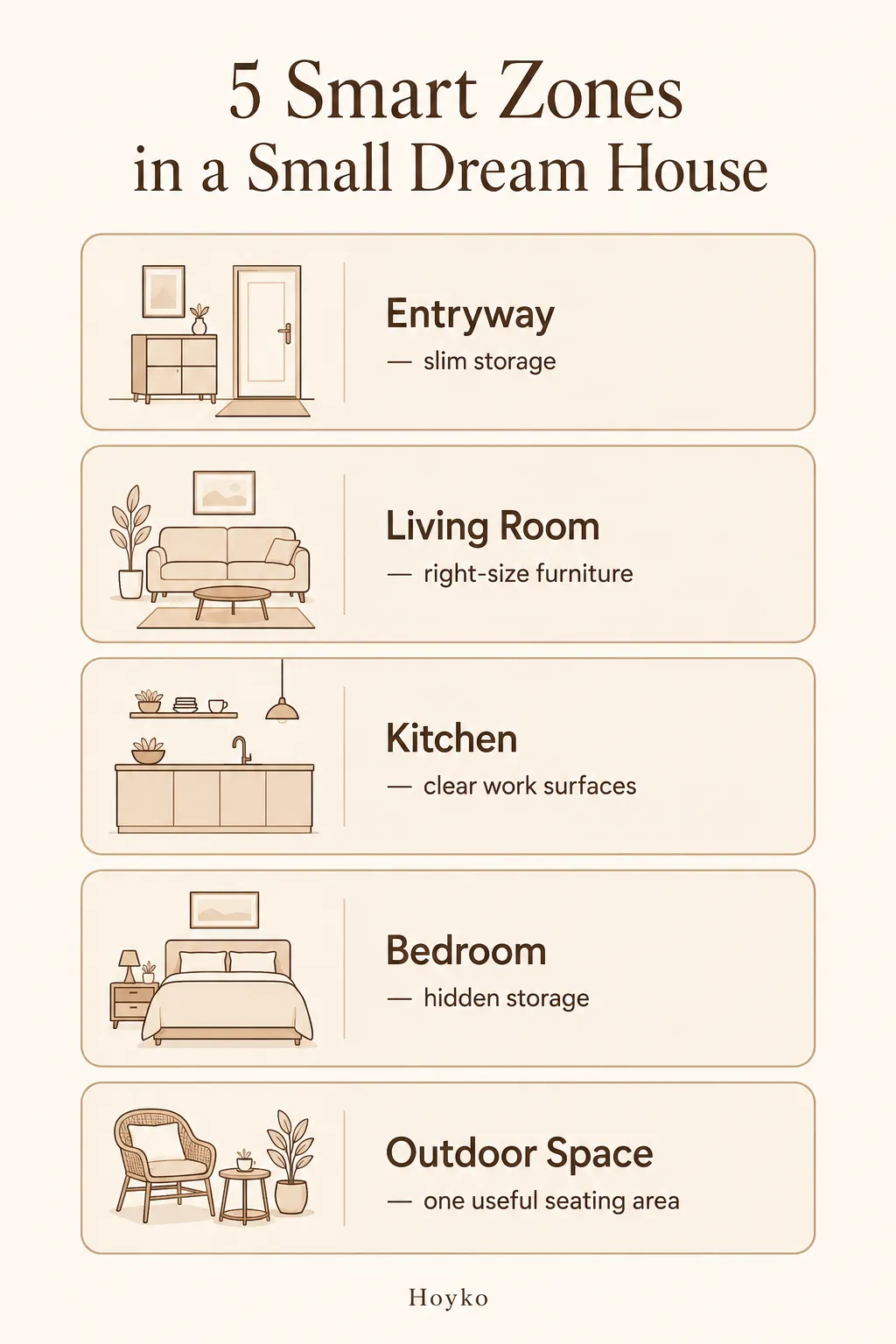
Small Dream House Checklist
- Choose one clear home style.
- Keep the exterior shape balanced.
- Use a connected exterior palette.
- Create a small, useful porch.
- Plan for natural light.
- Make the entryway functional.
- Keep the main pathways open.
- Add built-in or hidden storage.
- Choose furniture that fits the scale.
- Layer the lighting.
- Use vertical storage carefully.
- Keep the living room comfortable.
- Make the kitchen practical.
- Add a compact dining nook.
- Keep the bedroom restful.
- Use the outdoor space.
- Repeat materials and colors.
- Keep decor light and personal.
- Prioritize function before accessories.
A small dream house does not need more square footage to feel special. It needs thoughtful planning, comfortable rooms, and details that make everyday life easier.
FAQ About Small Dream House Ideas
Can a small house still feel like a dream house?
Yes. A small home can feel special when it has a practical layout, natural light, comfortable furniture, useful storage, a connected palette, and welcoming exterior details. The feeling comes from how the home works, not only its size.
How can I make a small dream house feel larger?
Use natural light, lighter colors, correctly sized furniture, mirrors, higher curtains, vertical storage, and fewer decorative pieces. Keep important walkways open and avoid blocking windows.
Which exterior styles work well for small dream homes?
Cottage, warm modern, modern farmhouse, cabin-inspired, and simple classic exteriors can all work. The strongest design uses one clear architectural direction and a limited number of connected materials.
How do I make a small home cozy without creating clutter?
Use texture through rugs, linen, wood, woven baskets, and soft lighting instead of adding many small decorations. Keep surfaces partly open and give everyday items a clear storage place.
What should I improve first in a small home?
Begin with the feature that affects daily life most. Better storage, improved lighting, correctly sized furniture, or a clearer layout will usually have more impact than adding new decor.
Conclusion
Small dream house ideas are about making less space feel more meaningful.
Begin with a simple exterior, natural light, clear pathways, smart storage, layered lighting, and furniture that fits. Then add personal details slowly.
A small dream house should feel easy to move through, easy to care for, and comfortable enough to enjoy every day.