18 Cottage Dream House Ideas Full of Warmth and Charm
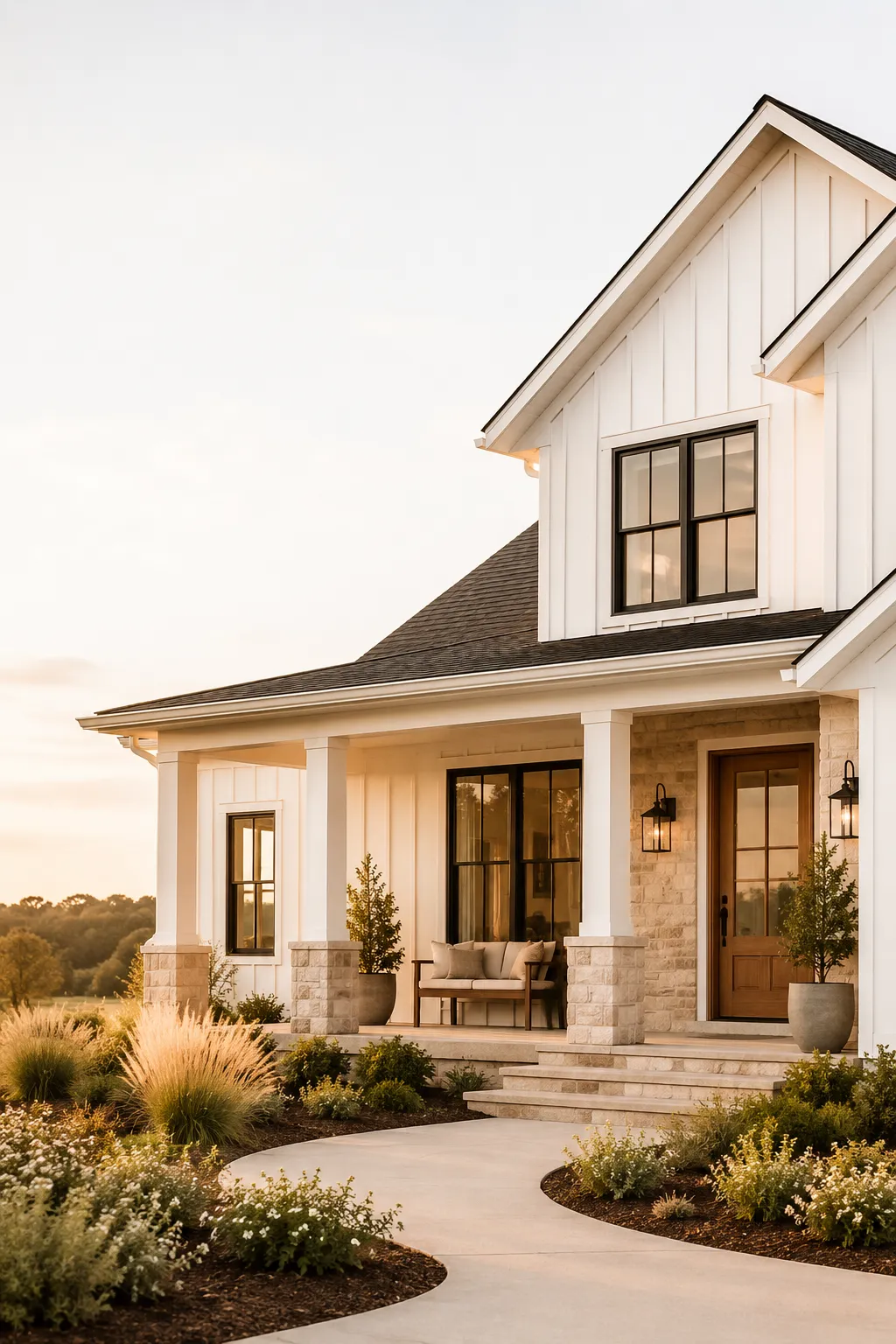
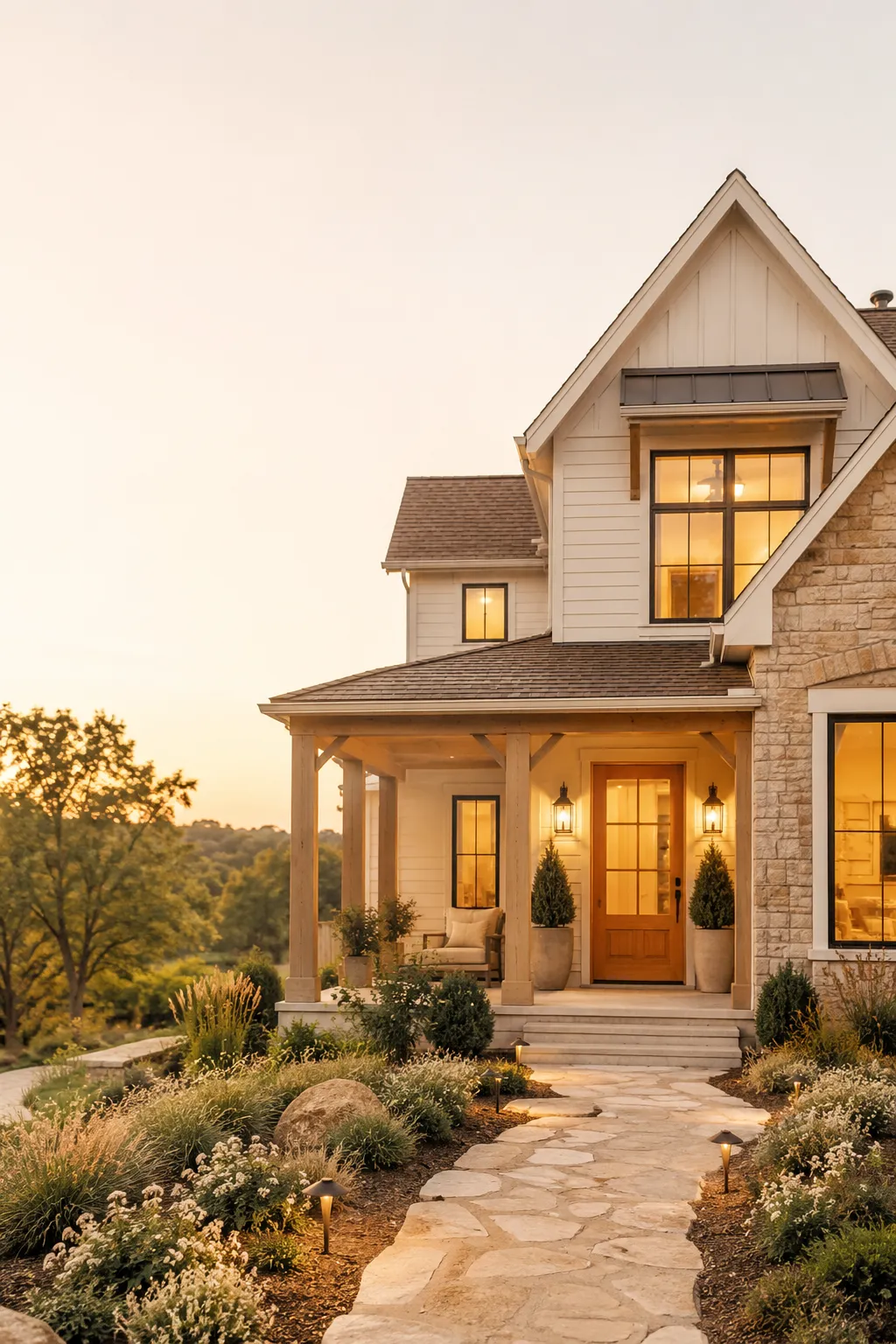
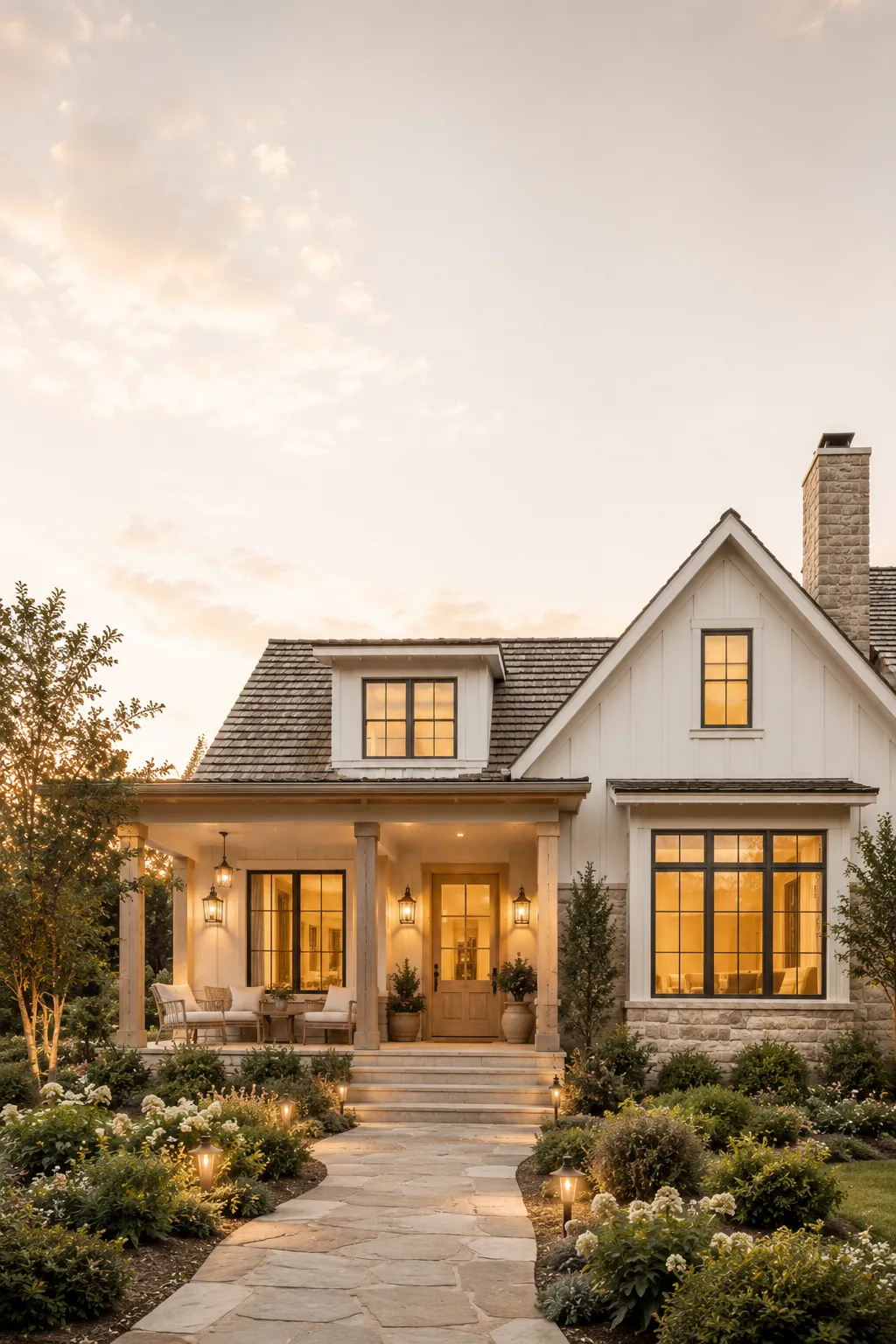
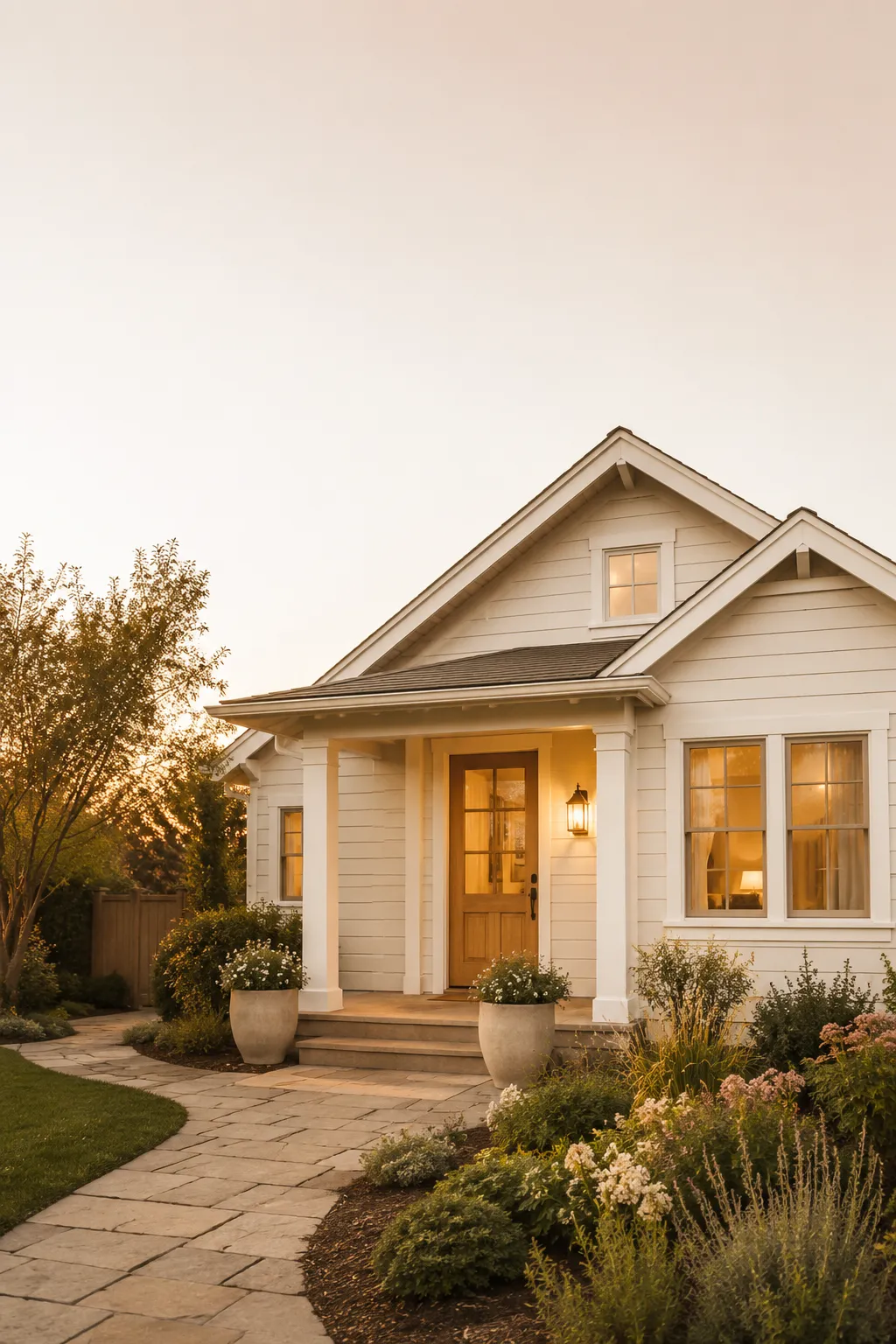
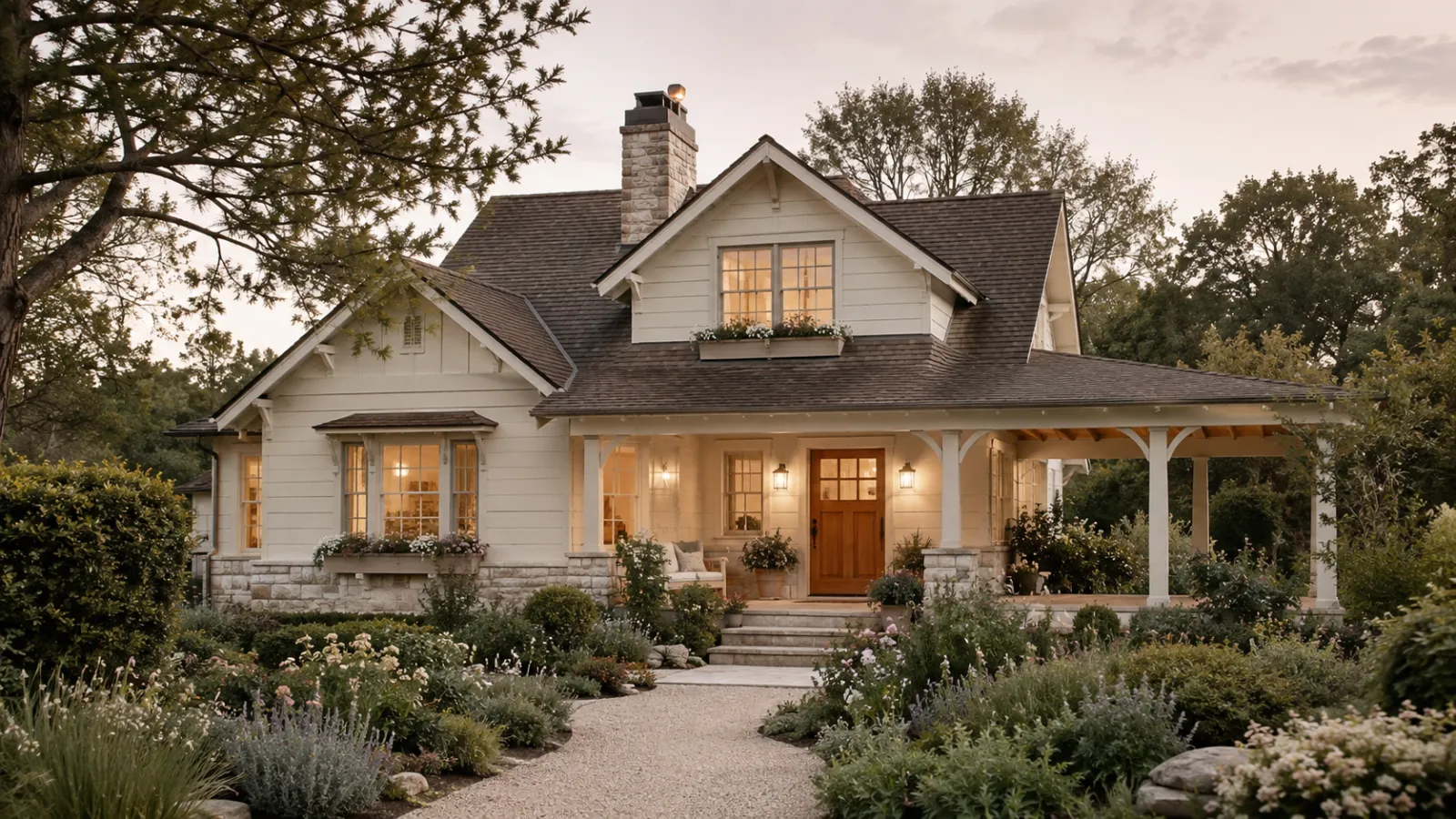
Cottage dream house ideas feel most memorable when the home looks welcoming before anyone reaches the door. A softly curved path, glowing windows, gentle planting, and natural materials can make a cottage feel settled into its surroundings.
Cottage charm does not require perfect symmetry or heavy decoration. It often comes from practical porches, timeworn texture, relaxed gardens, and details that appear to have been collected slowly.
The finished home should feel personal, comfortable, and easy to imagine living in.
For the broader design foundation, begin with the dream house ideas guide.
1. Start With a Soft Cottage Feeling
A cottage dream house should begin with a clear mood.
It might feel like a warm cream garden cottage, a small stone home, a quiet farmhouse cottage, or a softer version of modern design.
Choosing one direction makes every later decision easier. The roofline, siding, windows, door, planting, flooring, and interior materials should support the same visual story.
The prettiest cottage homes feel collected over time rather than decorated all at once.
2. Choose Gentle Exterior Colors
Soft colors help a cottage blend naturally with its garden.
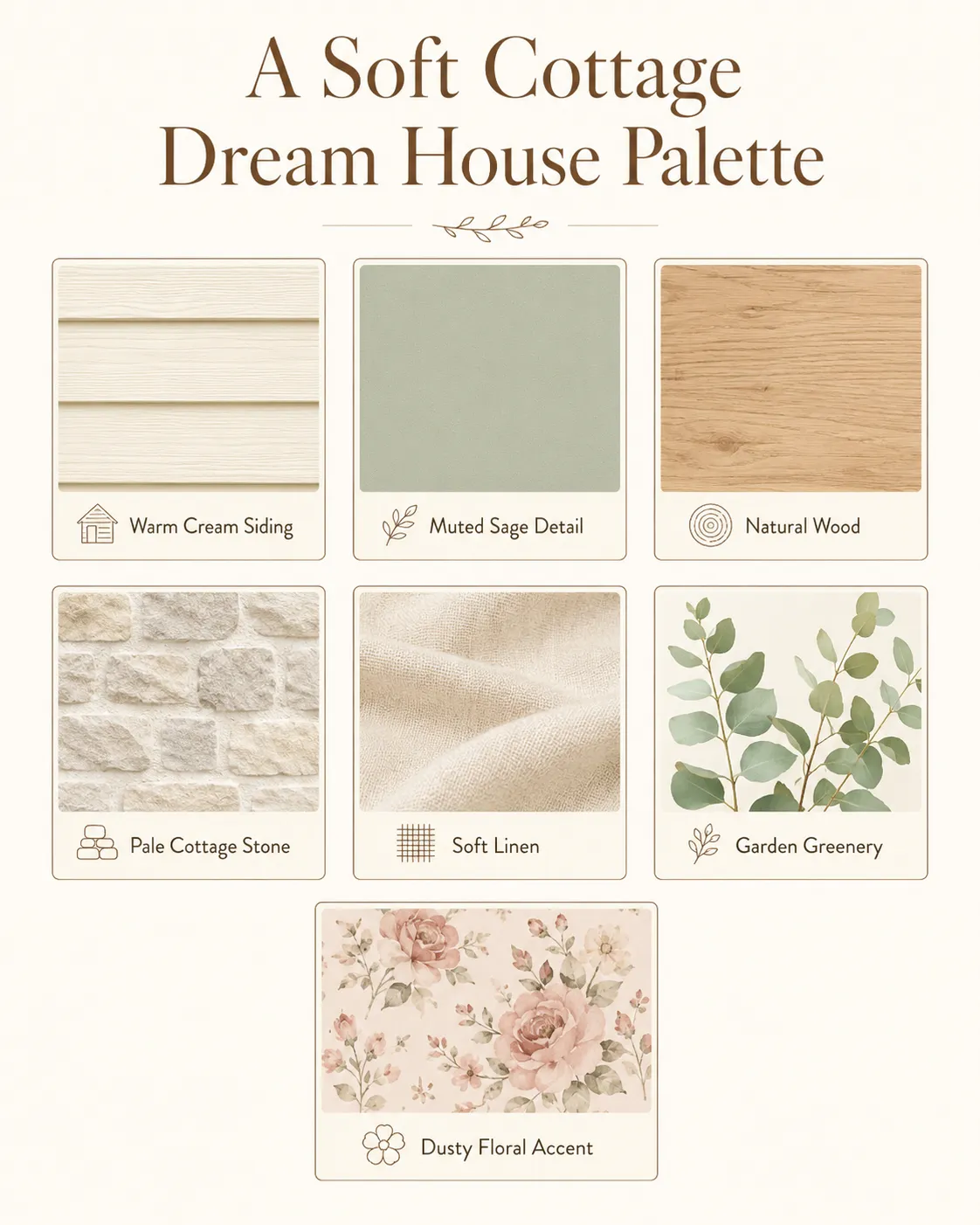
Warm white, cream, pale beige, muted sage, dusty blue, gentle taupe, warm gray, and light clay can all work beautifully.
Keep the main palette restrained:
- one siding color
- one trim color
- one gentle accent
- one natural material
A cream cottage may feel calm and timeless, while a muted sage exterior can connect beautifully with greenery.
Test a large paint sample in direct sun and shade. Roofing, stone, trim, and nearby plants can change how the same color appears throughout the day.
For more palette and material inspiration, see the dream house exterior ideas guide.
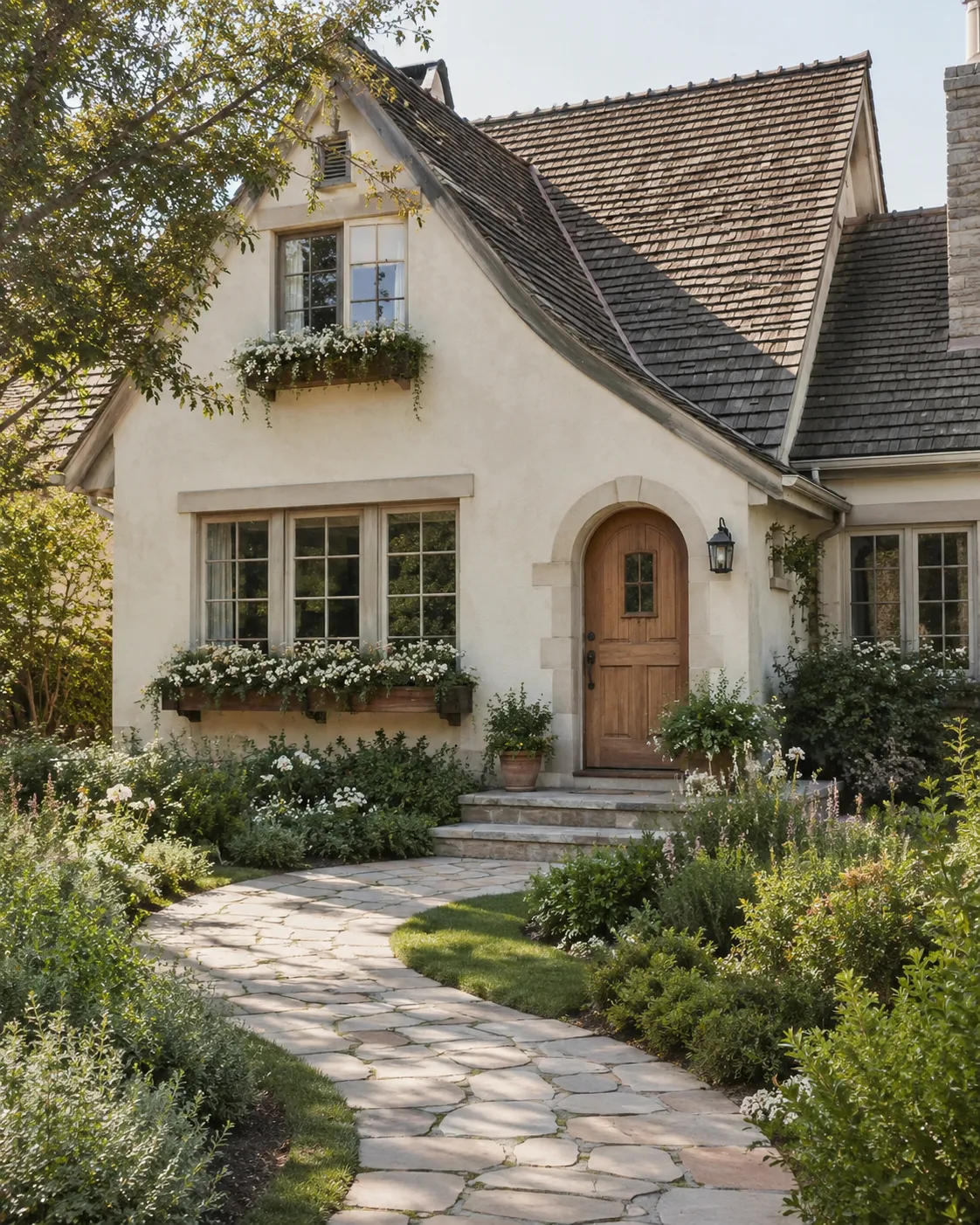
3. Add a Welcoming Front Door
The front door can give a cottage exterior its most personal moment.
Natural wood feels warm and grounded. Muted sage feels calm. Dusty blue or soft clay can add character without overpowering the facade.
Keep the surrounding decor simple. A natural doormat, one restrained wreath, and a single planter may be enough.
Choose an exterior-rated finish and follow the manufacturer’s maintenance guidance. A covered entry can also reduce exposure to strong sun and heavy rain.
The door should feel like a gentle welcome rather than a seasonal display.
4. Create a Useful Cottage Porch
A cottage porch does not need to be large to feel special.
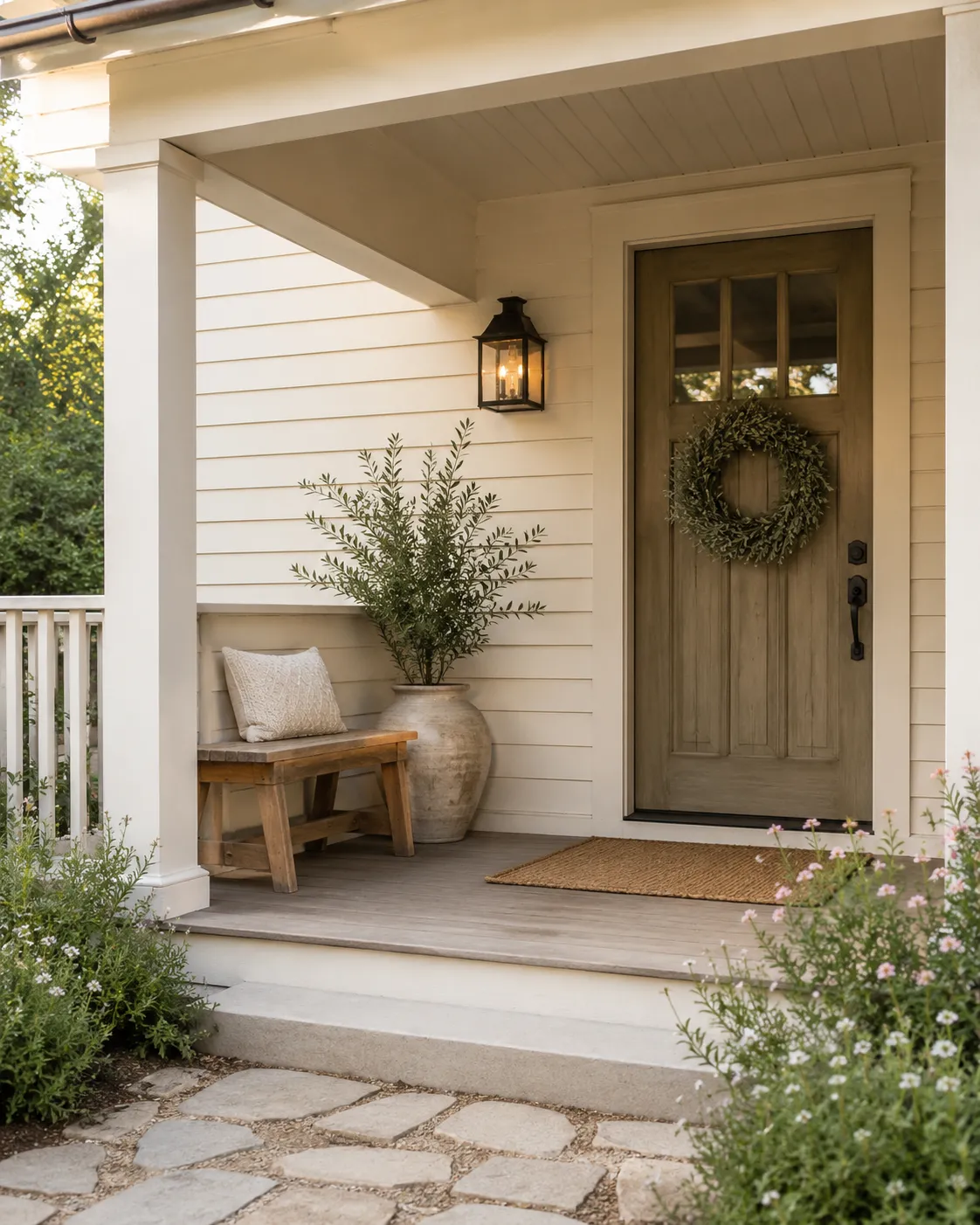
One slim chair, a wood bench, a natural doormat, a large planter, and a warm wall lantern can create enough character.
Protect the main route to the door. As a practical starting point, preserve around 30–36 inches of clear movement where the porch allows.
On a tiny entry, one larger planter usually looks calmer than several small accessories.
Seasonal details can be added later through restrained wreaths, pillow covers, or planters. The fall decor ideas guide has more gentle combinations.
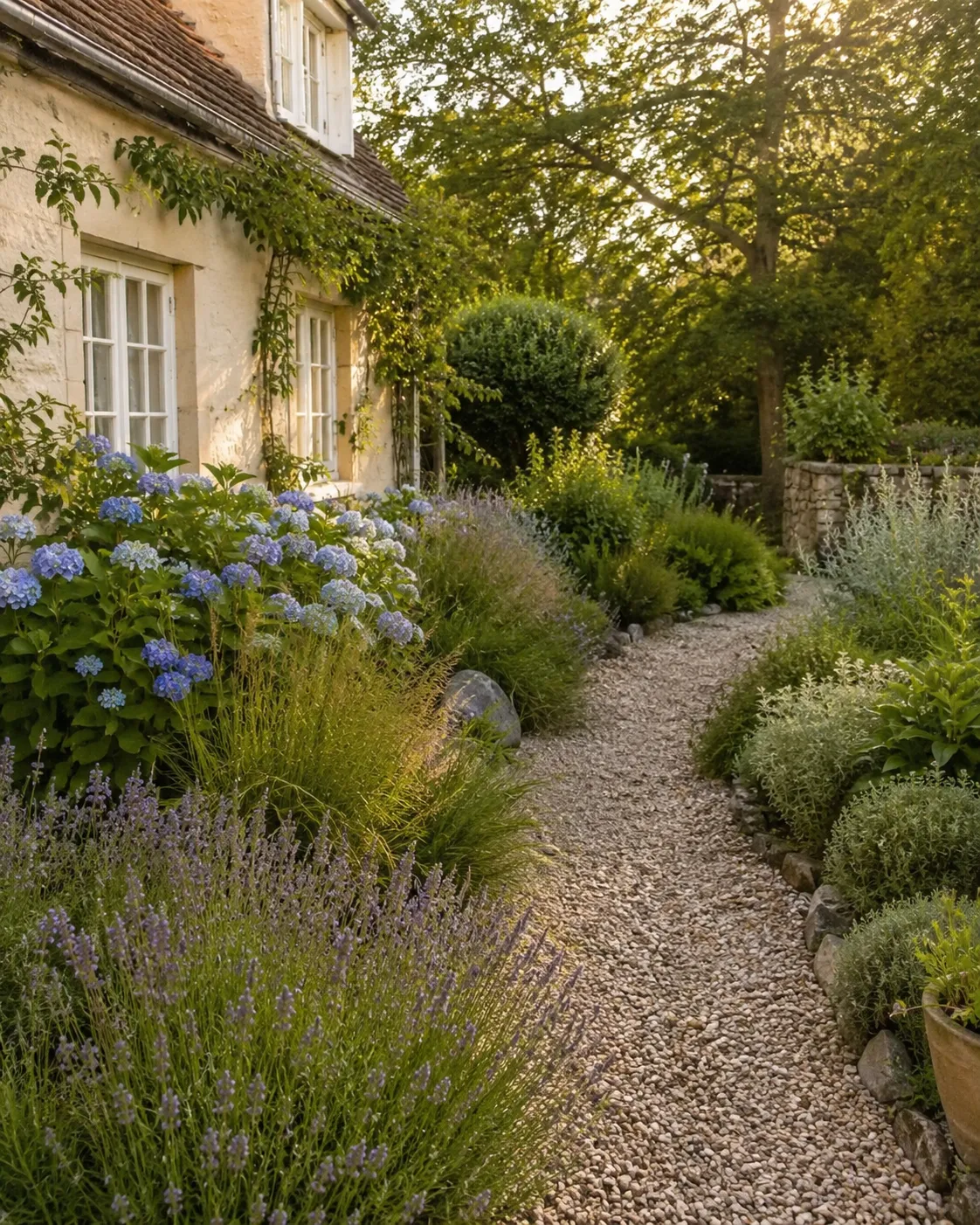
5. Use a Garden Path for Storybook Charm
A garden path guides the eye toward the entrance and softens the approach to the house.
Gravel, stepping stones, brick, and natural pavers can all create a relaxed cottage mood. A slight curve often feels more natural than a perfectly straight path.
Use low flowers, lavender, grasses, small shrubs, or restrained garden lights along the edges.
The pathway should still feel stable and easy to use. Choose materials according to drainage, climate, maintenance, and everyday accessibility.
Loose gravel may need regular edging, while uneven stones can become difficult to walk on when they shift.
6. Add Window Boxes With Restraint
Window boxes can make even a simple cottage exterior feel cared for.
Use soft greenery, herbs, small white flowers, trailing vines, lavender, or seasonal stems. Keep the palette related to the garden rather than filling every box with competing colors.
Window boxes need secure mounting and clear drainage. Select plants according to the window’s sunlight and their mature size.
A few well-maintained boxes create more charm than several overflowing arrangements.
The official RHS cottage garden plant guidance can remain linked here as a useful external resource.
7. Bring in Natural Stone
Stone gives a cottage visual weight and a sense of age.
Use it around the entry, chimney, porch steps, garden path, lower facade, or small retaining wall. Soft beige, warm gray, pale limestone, and naturally textured stone work well beside cream siding and greenery.
Keep the stone focused. Covering every surface may make a small cottage feel heavy.
Installation, moisture control, drainage, and climate suitability should be reviewed with a qualified local professional before permanent exterior work begins.
For a cleaner variation, the modern farmhouse dream house guide shows how warm stone can work with simpler architecture.
8. Let the Windows Glow
Windows help a cottage feel alive during the day and welcoming at night.
Small divided windows, softly arched windows, restrained black frames, and natural wood trim can all add character.
Use light curtains that soften the interior without blocking too much daylight. Heavy treatments may make smaller rooms feel darker and reduce the warm glow from outside.
At night, table lamps and sconces near the windows can create a gentle, layered effect.
The goal is not to light every room brightly. It is to make the home feel quietly occupied and comfortable.
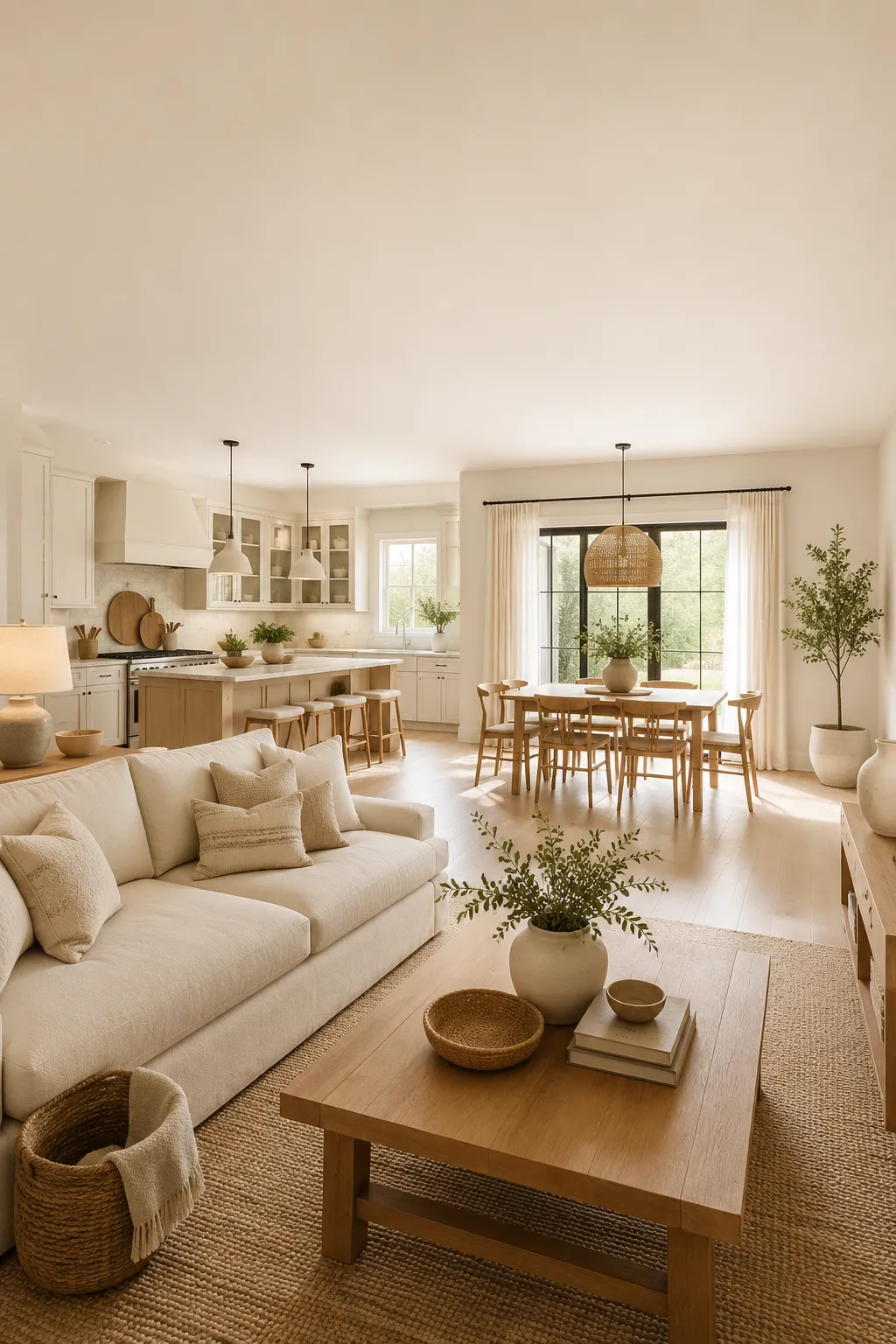
9. Keep the Interior Warm and Layered
A cottage interior should feel relaxed rather than perfectly matched.
Warm-white walls, linen curtains, wood furniture, woven baskets, ceramic pieces, soft rugs, and a limited number of floral details can create depth.
Repeat a small material palette throughout the rooms. Cream, beige, warm wood, muted green, linen, and gentle lighting can connect the whole interior.
Layer texture instead of adding many decorative objects.
For a complete whole-home approach, dream house interior ideas here.
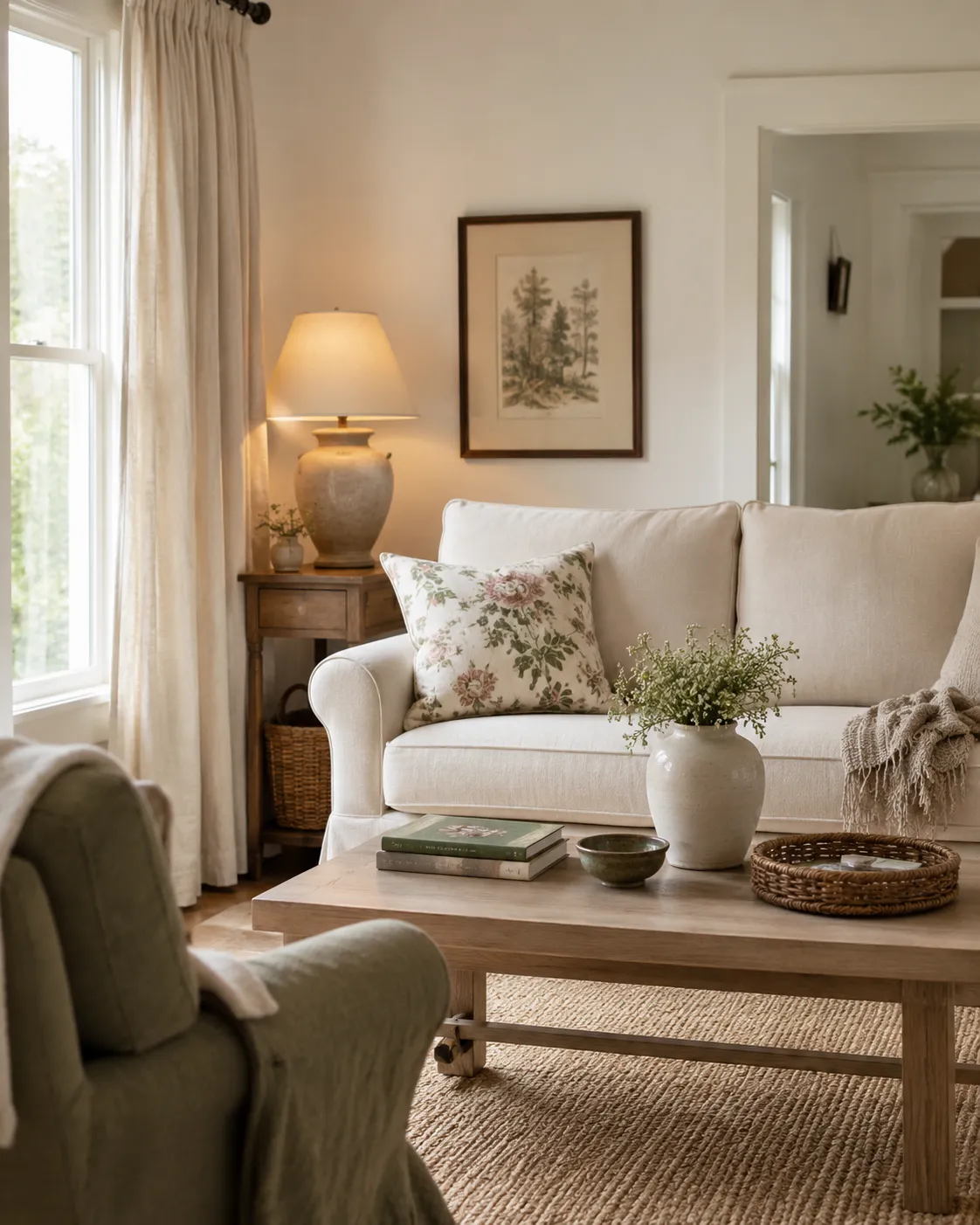
10. Add Cottage Charm to the Living Room
A cottage living room should feel comfortable enough for reading, conversation, and everyday rest.
Begin with a cream sofa or loveseat, a connected neutral rug, a light wood coffee table, linen curtains, and one warm lamp.
A floral pillow, ceramic vase, or vintage-style print can add personality. Use these details lightly so the room does not feel themed.
Around 16–18 inches between the sofa and coffee table often provides a useful starting point, though the final spacing should suit the room and household.
For more relaxed styling, see the cozy living room ideas guide.
11. Use Layered Warm Lighting
Lighting makes cottage colors and textures feel softer.
Combine table lamps, wall sconces, pendants, lantern-style fixtures, and a small amount of task lighting.
For living rooms, bedrooms, and dining spaces, warm-white LEDs around 2700K–3000K usually work well beside wood, linen, cream upholstery, and stone.
Use dimmers where possible so brighter task lighting can shift to a gentler evening mood.
Rooms with real plants also need enough natural or supplemental light for the selected species. The University of Minnesota Extension plant-lighting resource can remain linked here.
For more evening inspiration, see the warm living room ideas guide.
12. Style a Cottage Kitchen for Daily Use
A cottage kitchen should feel warm and practical before it feels decorative.
Warm-white cabinets, wood shelves, simple hardware, soft stone counters, ceramic dishes, and linen details can create the look without overwhelming the room.
Keep the main preparation area clear. A wood cutting board, ceramic bowl, or small herb plant may provide enough styling.
Open shelves work best when they hold a limited number of useful pieces in connected colors.
A cottage kitchen should look beautiful because it is organized, functional, and made from materials that age well.
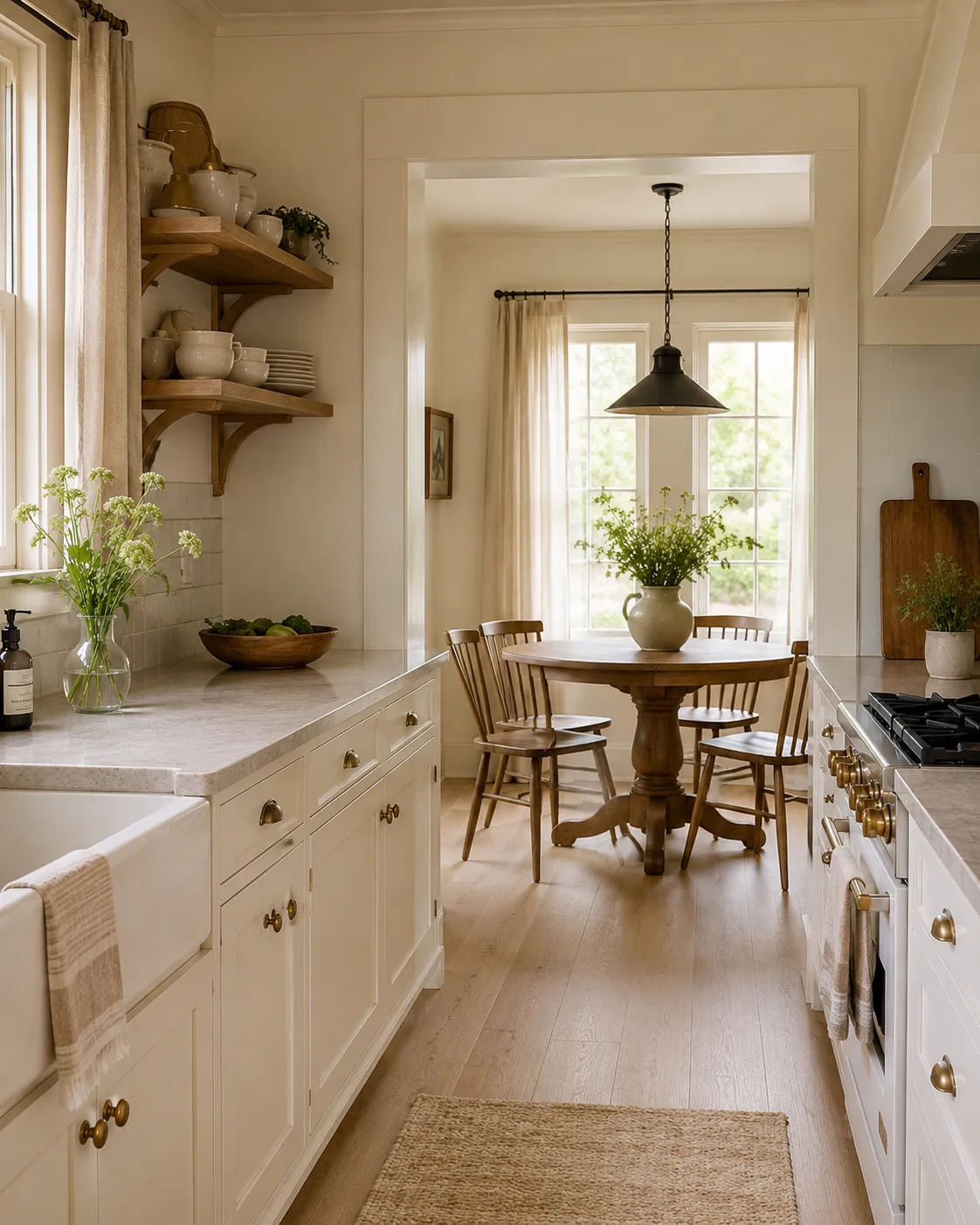
13. Create a Sweet Dining Corner
A cottage dining space can be compact and still feel inviting.
Use a round wood table, built-in bench, slim chairs, washable cushions, linen runner, and one warm pendant light.
A pedestal table may create more comfortable legroom than a table with four corner legs.
Keep the centerpiece low and simple. A ceramic bowl, small vase, or a few branches will leave room for meals and conversation.
Where possible, preserve roughly 30–36 inches along the main approach so chairs do not interrupt the kitchen or nearby doorway.
For more compact layout ideas, see the small dream house ideas guide.
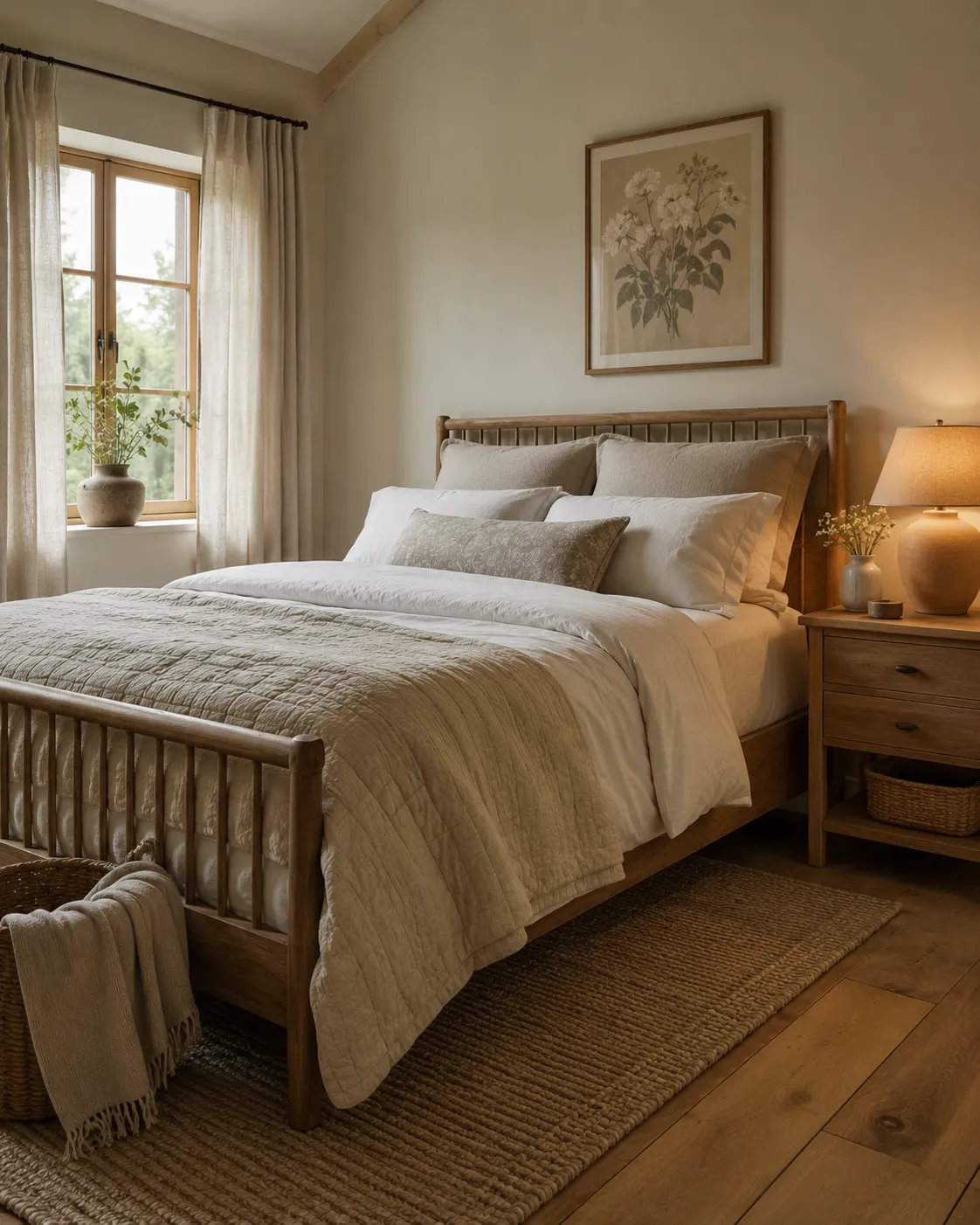
14. Make the Bedroom Soft and Calm
A cottage bedroom should feel restful before it feels decorated.
Use cream bedding, a restrained quilt, light wood furniture, linen curtains, a neutral rug, and gentle bedside lighting.
One floral print, woven basket, ceramic vase, or vintage-style stool can add character without crowding the room.
Limit decorative pillows and keep nightstand surfaces partly open.
Closed nightstand storage or under-bed drawers can reduce visible clutter while preserving the softer cottage mood.
15. Use Vintage Touches Carefully
Vintage pieces can make a cottage feel personal and collected.
A weathered mirror, old wood stool, framed print, ceramic pitcher, or small side table can add character.
Use one or two pieces at a time and mix them with simpler furniture. When every item looks aged or ornamental, the room may feel heavy rather than relaxed.
Older furniture should also be checked for stability, sharp edges, peeling finishes, and practical daily use.
Cottage style should feel collected, not cluttered.
For more personal styling ideas, aesthetic home decor ideas here.
16. Keep the Garden Soft and Natural
A cottage garden should appear relaxed while remaining easy to walk through and maintain.
Lavender, roses, daisies, hydrangeas, herbs, shrubs, climbing plants, and soft grasses can all contribute to the mood.
Repeat a few plant varieties instead of introducing a different flower in every area.
Choose plants according to climate, sunlight, soil, mature height, and maintenance needs. Leave enough space between planting and the house for access, airflow, and future growth.
A relaxed garden still needs clear paths and defined planting areas.
17. Add Quiet Luxury in a Gentle Way
A cottage dream house can feel elevated without becoming formal.
Invest in details that are used or touched often: comfortable seating, durable hardware, quality lighting, linen curtains, warm wood, and well-chosen stone.
One substantial material usually creates more impact than several decorative substitutes.
Quiet luxury works especially well with cottage style because it supports comfort without removing softness or personality.
For more elevated inspiration, luxury dream house ideas here.
18. Keep the Cottage Look Timeless
Cottage style can become busy when every feature follows a theme.
Keep permanent choices simple: gentle exterior colors, natural materials, useful rooms, warm lighting, and relaxed landscaping.
Use pillows, wreaths, flowers, baskets, artwork, and seasonal stems for changes that are easy to reverse.
Avoid adding arched doors, shutters, floral fabrics, distressed wood, window boxes, and vintage signs all at once.
A timeless cottage should feel warm now and still look natural after trends change.
For year-round updates, see the seasonal decor ideas guide.
Common Cottage Dream House Mistakes
Using Too Many Storybook Details
Arched doors, shutters, climbing flowers, window boxes, decorative trim, and vintage signs can compete when they all appear together.
Choose a few cottage features and let the architecture remain clear.
Mixing Too Many Floral Patterns
Floral details can add softness, but several unrelated patterns may make the interior feel restless.
Repeat one main floral style and balance it with plain linen, warm wood, and neutral surfaces.
Crowding the Porch and Pathways
Planters, baskets, chairs, and seasonal decor should never block the entrance.
Keep the main route open and use fewer, better-scaled pieces.
Choosing Plants Only for Appearance
Flowers and shrubs should suit the climate, sunlight, soil, available space, and desired maintenance level.
Check mature height and width before planting near windows, walls, or pathways.
Filling Every Room With Vintage Pieces
Vintage furniture creates character when it has room to stand out.
Mix older pieces with clean surfaces and simpler furniture to keep the room feeling fresh.
Ignoring Everyday Storage
Baskets and open shelves cannot solve every storage problem.
Provide closed space for shoes, kitchen equipment, linens, electronics, and other everyday items before adding decorative accessories.
Ignoring Maintenance
Window boxes, exterior wood, stone, flowers, gravel paths, and light-colored siding all need care.
Choose materials and plants that match the amount of upkeep the household can realistically manage.
Cottage Dream House Checklist
- Choose one soft cottage direction.
- Use gentle exterior colors.
- Add a welcoming front door.
- Create a useful cottage porch.
- Keep the entrance path clear.
- Use a relaxed garden path.
- Add window boxes with restraint.
- Bring in natural stone selectively.
- Let the windows feel warm and open.
- Repeat connected interior materials.
- Keep the living room comfortable.
- Layer warm lighting.
- Make the kitchen practical.
- Create a compact dining corner.
- Keep bedrooms restful.
- Use vintage details carefully.
- Choose realistic garden plants.
- Add quiet luxury gently.
- Keep permanent choices timeless.
A cottage dream house feels most convincing when softness, usefulness, natural materials, and personal details work together.
FAQ About Cottage Dream House Ideas
What makes a cottage dream house feel cozy?
Soft colors, warm lighting, a welcoming porch, natural textures, comfortable furniture, gentle landscaping, and personal details can make a cottage feel cozy without making it cluttered.
Which colors work best for a cottage home?
Warm white, cream, pale beige, muted sage, dusty blue, soft taupe, warm gray, and light clay work well. Choose a limited palette that relates naturally to the roof, stone, wood, and surrounding garden.
How can a cottage exterior look charming without feeling busy?
Choose two or three main features, such as a softly colored front door, restrained window boxes, a curved path, and warm porch lighting. Avoid using every cottage detail on the same facade.
Can cottage style still look modern?
Yes. Use clean architectural lines, a simple color palette, natural wood, restrained stone, uncluttered rooms, and fewer decorative pieces. The cottage feeling can come from texture, lighting, and planting rather than themed decor.
How can a cottage home feel more expensive on a smaller budget?
Focus on lighting, exterior paint, curtains, hardware, rugs, and one connected material palette. A few well-scaled pieces often feel more polished than many small accessories.
Conclusion
Cottage dream house ideas are not about creating a perfect storybook home. The most inviting cottages feel soft, useful, personal, and naturally connected to their surroundings.
Begin with gentle exterior colors, a welcoming entrance, warm windows, a practical garden path, and relaxed landscaping. Carry the same feeling indoors through linen, wood, warm lighting, comfortable furniture, and restrained vintage details.
The best cottage dream house feels peaceful from the path and even more welcoming once the door opens.