Small Kitchen Storage Ideas for Apartments and Tiny Spaces
Small kitchen storage ideas become especially useful when the cabinets look full but still have awkward gaps, hidden corners, or unused space above everyday dishes.
A stack of baking sheets can swallow half a lower cupboard. The blender takes up the shelf where the mixing bowls should go, while pantry packets collect in the space beside the microwave.
Adding more furniture is not always the answer. Sometimes a shelf riser, a better-fitting divider, or a narrow cart is enough to make an existing space easier to use.
These ideas focus on storage that fits real apartments and modest homes, including rental kitchens where permanent changes may not be possible.
Small Kitchen Storage Ideas at a Glance
Look inside the cabinets before adding anything to the walls.
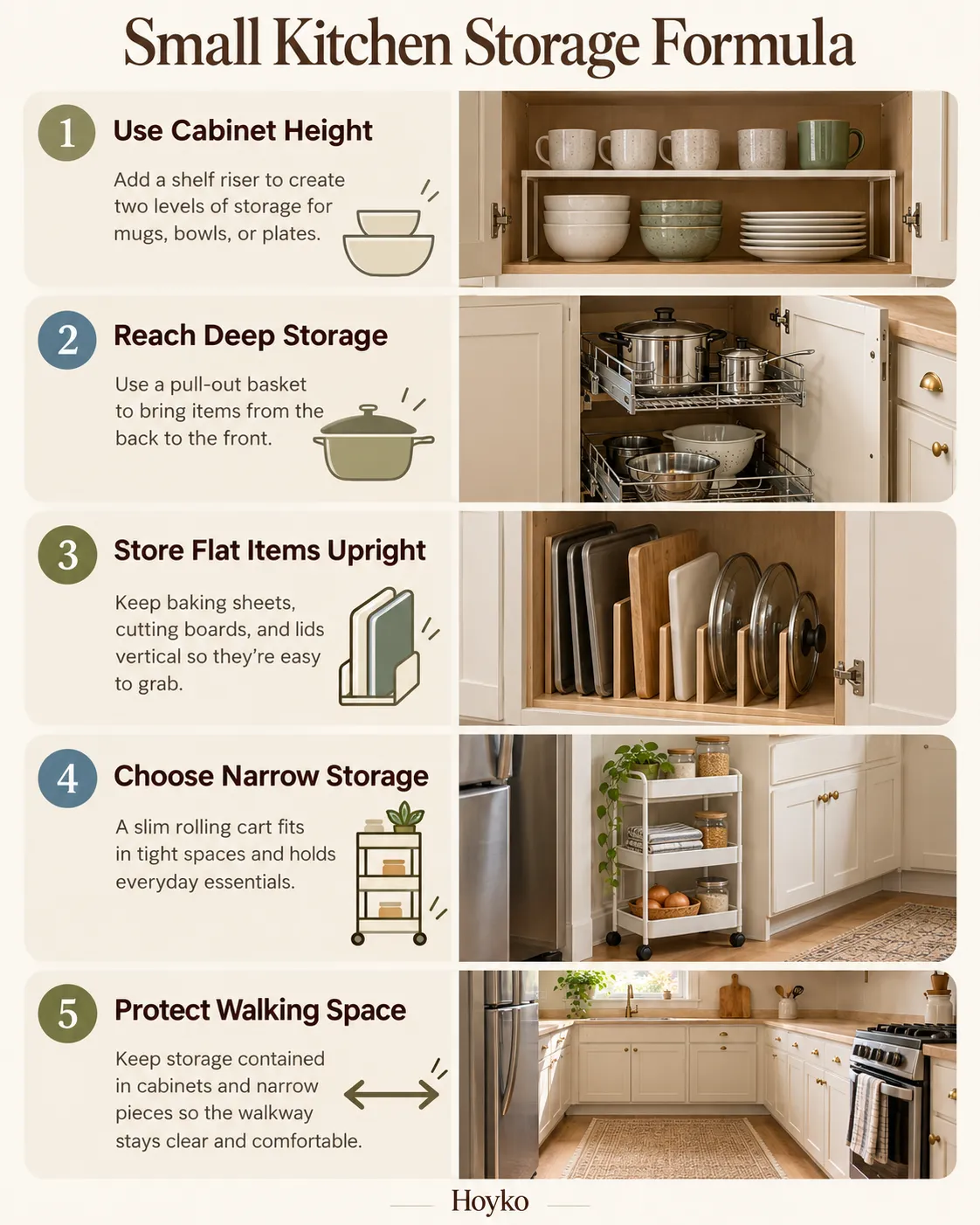
A shelf riser can make use of the space above plates. A pull-out basket helps with deep cabinets, while upright dividers keep baking trays and pot lids from becoming a heavy stack.
If built-in storage is limited, a narrow cart or freestanding unit may be worth considering.
Before buying an organizer, measure the space it needs to fit and move. Cabinet hinges, plumbing, shelf supports, and appliance doors can all affect the usable dimensions.
Choose the problem you want to solve first. An organizer should give something a better home, not become another item you need to work around.
Use Shelf Risers Inside Tall Cabinets
An upper cabinet may look full because the plates occupy the entire shelf, even though there is unused height above them.
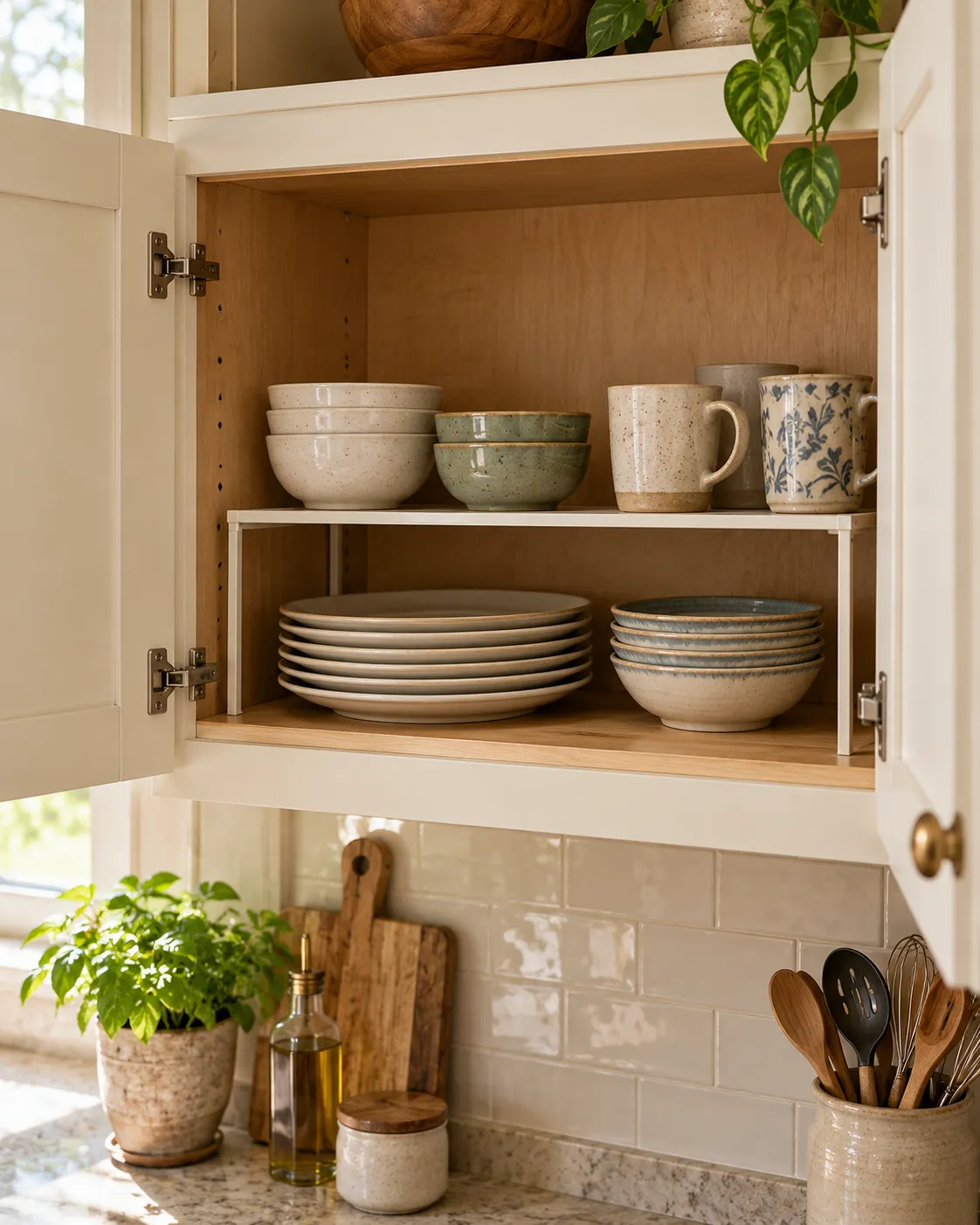
A freestanding shelf riser creates another level for smaller bowls, mugs, or lightweight dishes.
Choose a riser that sits comfortably inside the cabinet and leaves enough space to remove the items underneath. Check its dimensions and load rating.
Taller drinking glasses and serving pitchers can stay on a separate shelf where they are easier to lift out.
In a rental kitchen with fixed cabinet shelves, one well-fitting riser may be more useful than a set of matching storage containers.
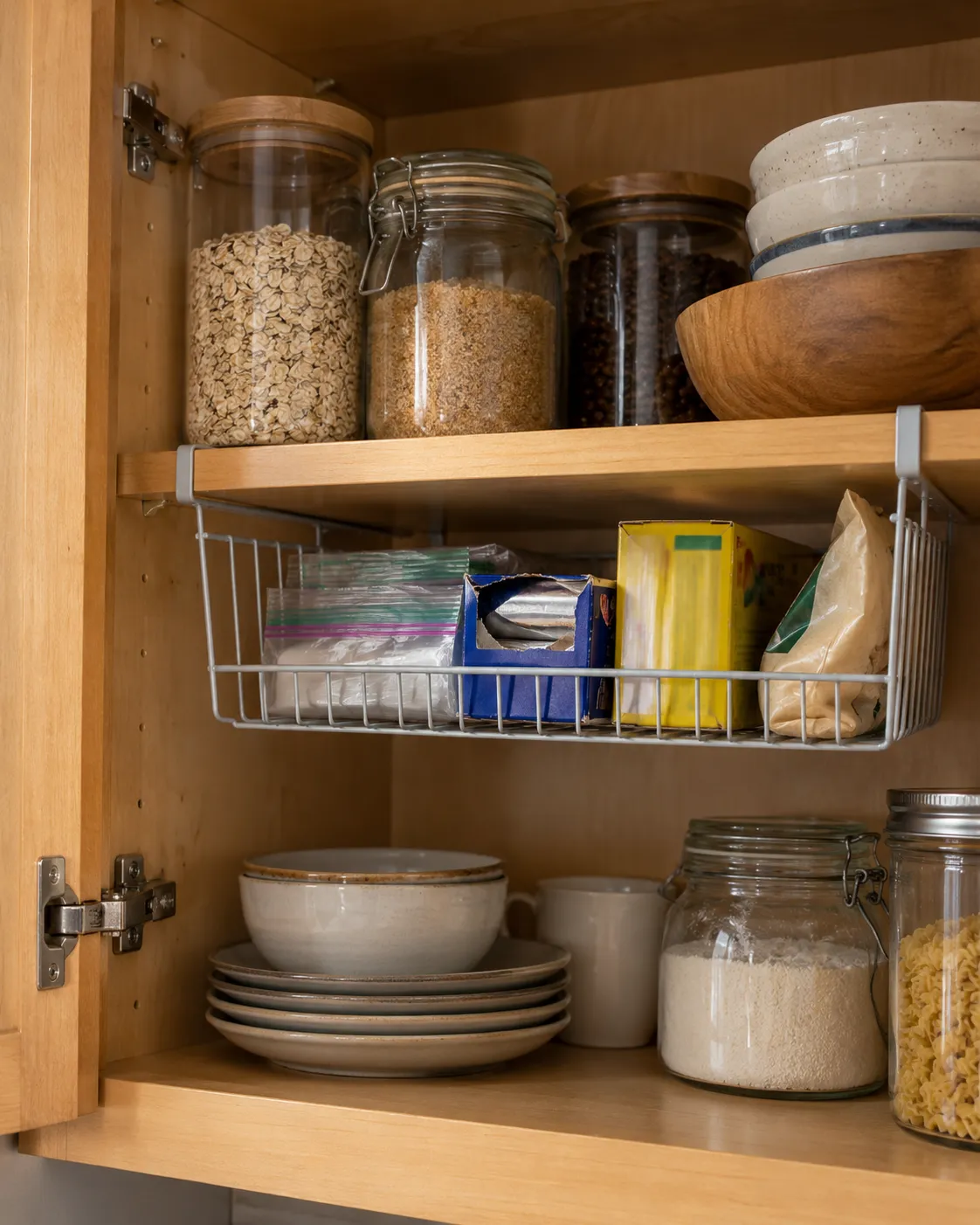
Use the Space Beneath Cabinet Shelves
The underside of a shelf is easy to miss when looking for more cupboard space.
A slim clip-on basket can hold lightweight items such as food wraps, small pantry packets, or kitchen linens without occupying the entire shelf below.
Check the depth carefully. Some hanging organizers extend far enough to interfere with the cabinet door or objects underneath.
For small spice containers, a compact tiered rack on the existing shelf may be a better choice if it makes the back row easier to see.
There is no reason to fill every available gap. Choose the accessory that solves the most frustrating part of that cabinet.
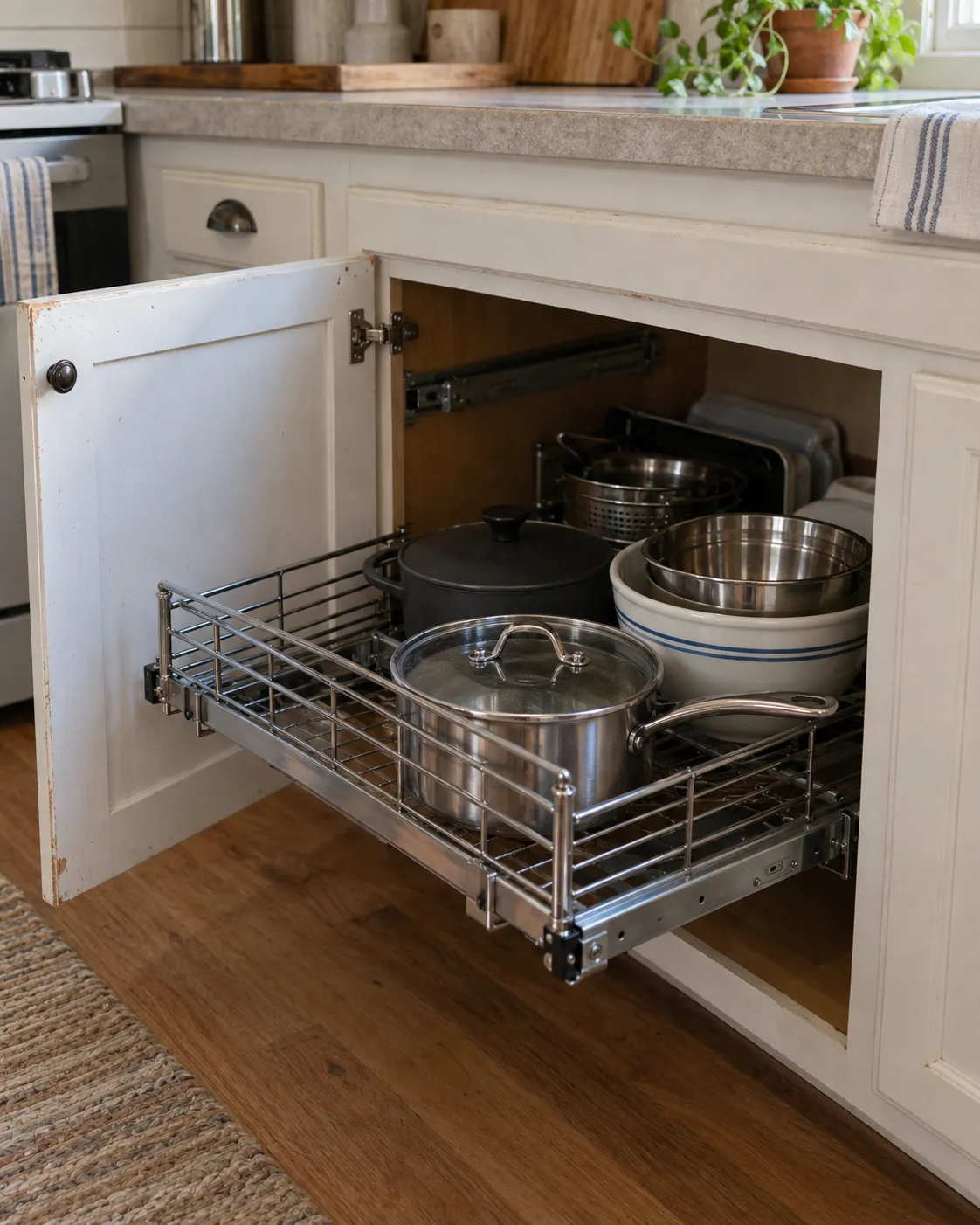
 Make Deep and Corner Cabinets Easier to Reach
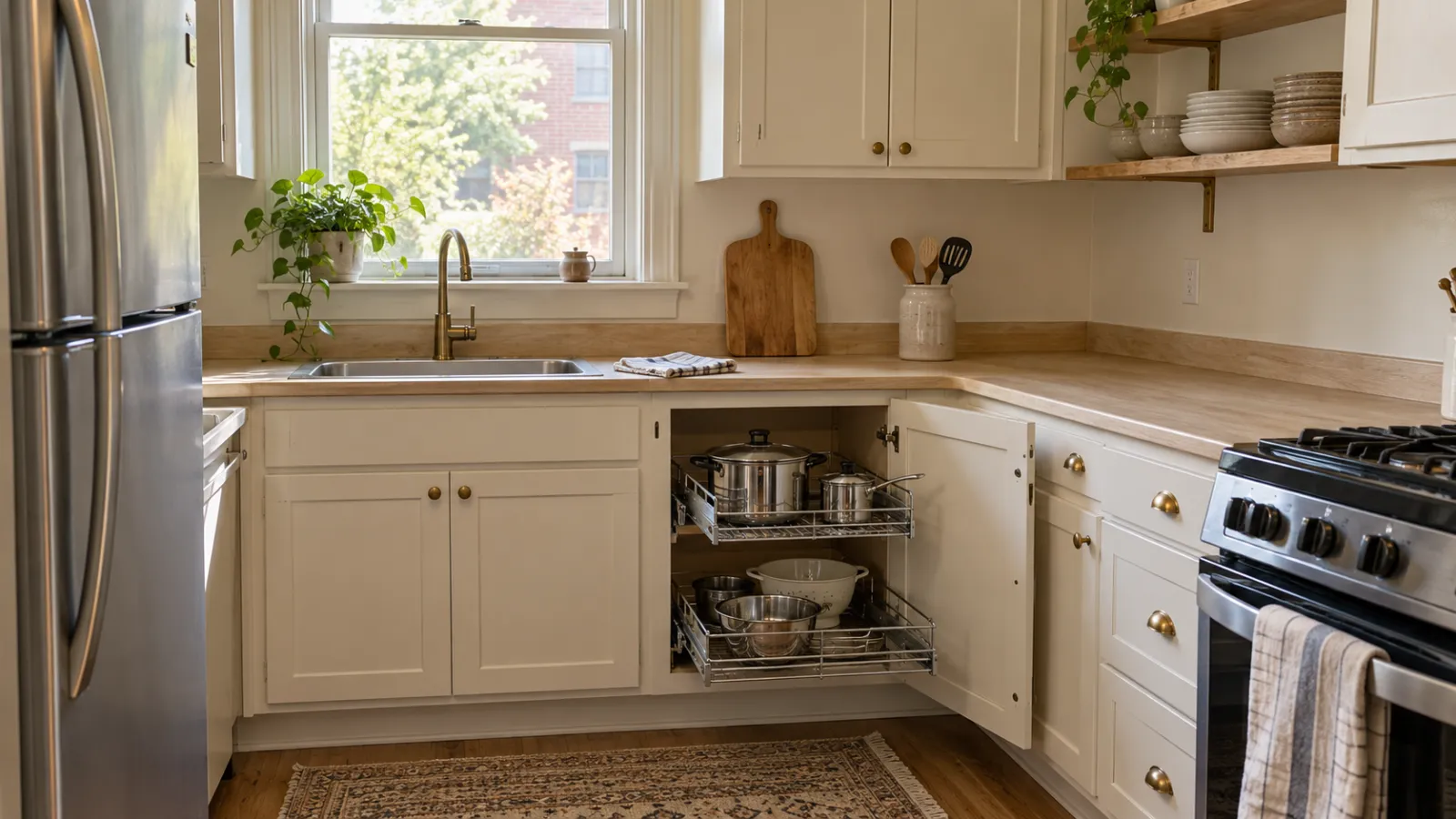
Deep lower cupboards often have room for cookware but make the items at the back difficult to reach.
A suitable pull-out basket can bring pans and mixing bowls forward without removing everything stored in front.
Corner cabinets need more attention because the door opening may be much narrower than the space inside.
A compact turntable or a corner-specific pull-out system may help, depending on the cabinet layout. Some systems need permanent fittings, so they are not ideal for every rental.
Measure the usable opening, account for hinges, and check the organizer's load rating before choosing a solution.
A removable basket is a simpler alternative when the cabinet cannot be modified.
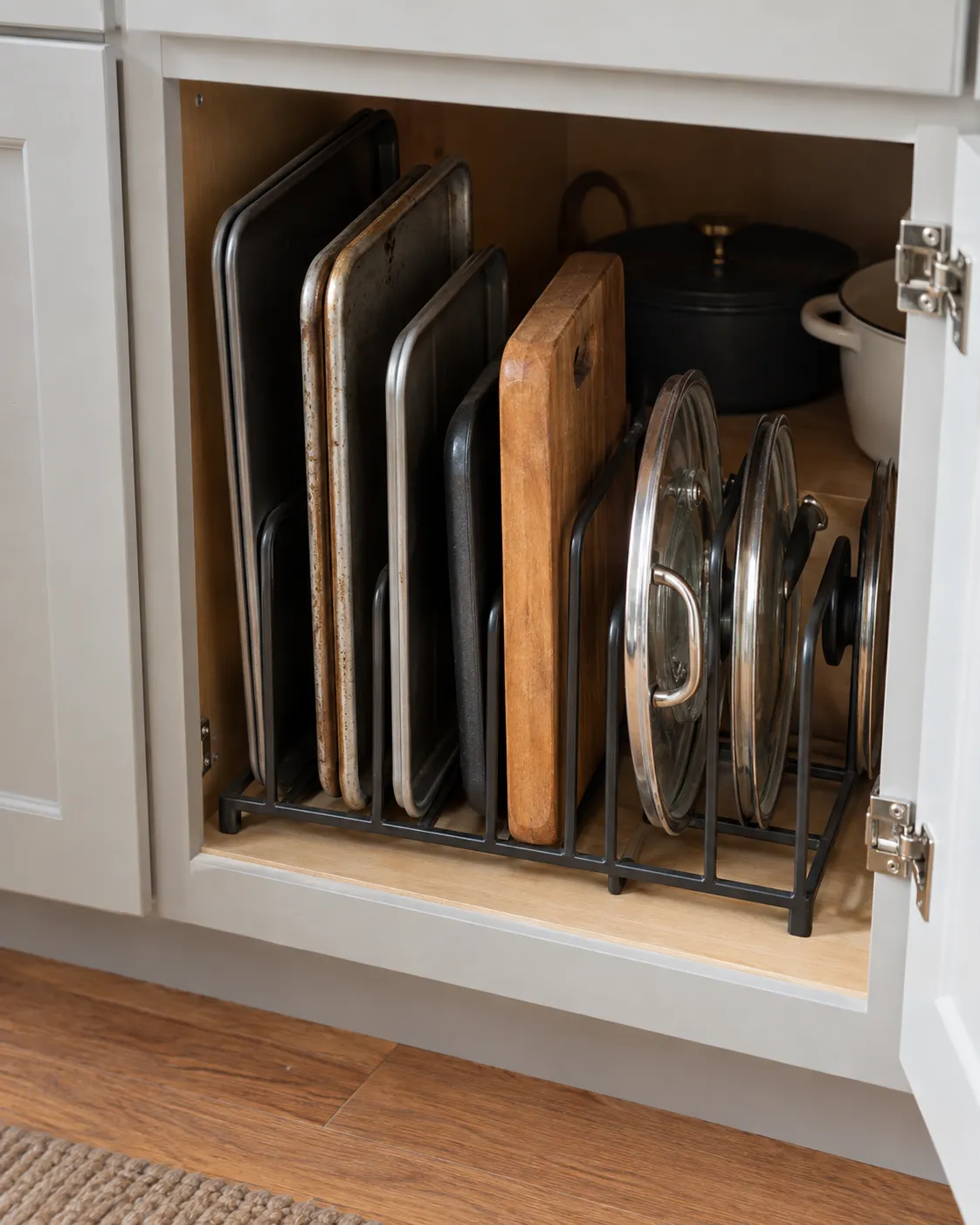
Store Pots, Pans, and Baking Sheets Upright
Baking sheets, cooling racks, cutting boards, and pot lids often end up stacked in the same lower cupboard.
The piece you need always seems to be underneath something heavier.
A suitable upright divider gives flat items their own slots. Choose a rack that stays stable and allows the cabinet door to close.
Store heavy pots and pans on appropriately rated lower shelves or drawers, rather than balancing them above lighter dishes.
If there is not enough space for a complete cookware organizer, a smaller divider for lids and baking trays may still make a noticeable difference.
Use Cabinet Doors for Lightweight Essentials
The inside of a cabinet door can hold items that otherwise disappear into a drawer.
A shallow over-the-door holder may work for kitchen towels, food wraps, or lightweight everyday supplies.
Check the space between the door and the cabinet shelves. The organizer should not scrape stored dishes or prevent the door from closing properly.
For rental kitchens, a suitable removable holder is often easier than changing the cabinet itself.
Keep heavy objects inside the cabinet unless the door organizer and its fittings are specifically rated for them.
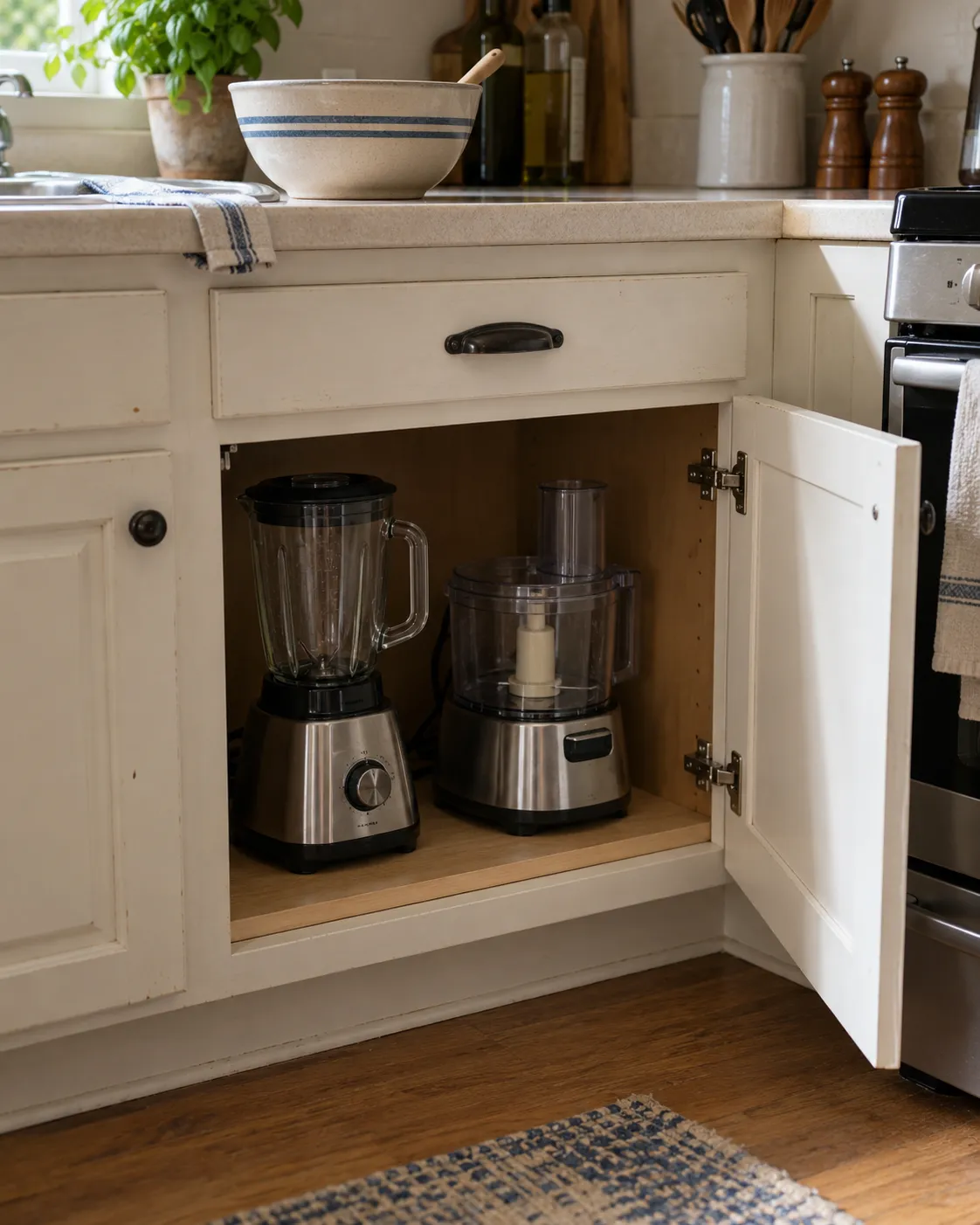
Find a Better Home for Small Appliances
Small appliances can take up a surprising amount of cabinet and counter space.
A toaster, blender, electric mixer, and food processor may all be useful, but they do not necessarily need to remain visible.
Keep frequently used appliances where they can be stored and retrieved comfortably. An occasional-use blender or mixer may fit better in a sturdy lower cabinet.
Heavy appliances should not be stored overhead. Check that shelves and any pull-out fittings can support their weight.
Follow each appliance's storage, use, and ventilation instructions.
An appliance cupboard should let you lift out the equipment without having to move a collection of unrelated objects first.
Fit a Slim Cart Into an Awkward Space
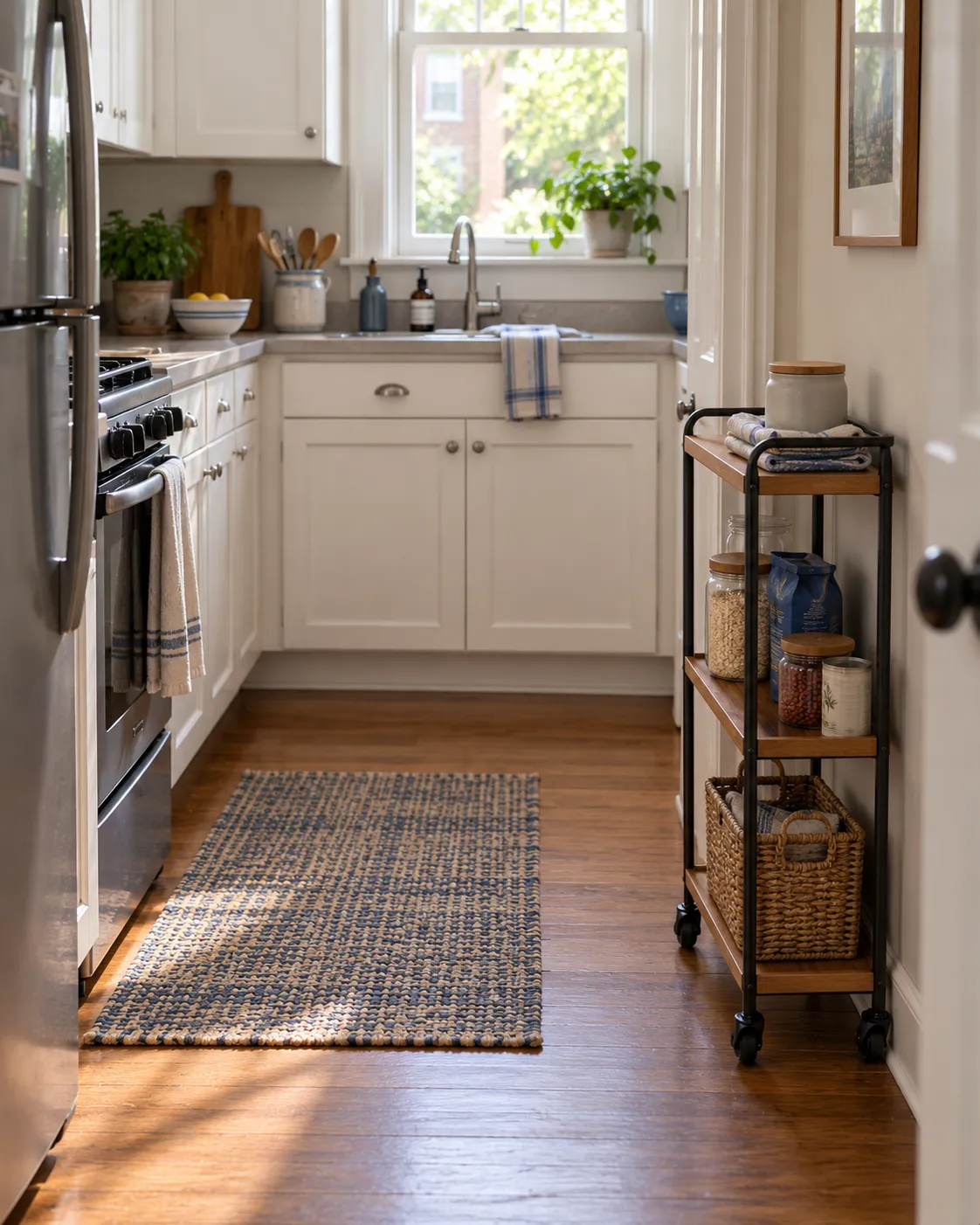
A narrow rolling cart can make an otherwise unused section of a kitchen more practical.
It might hold dry pantry supplies, folded kitchen towels, or a few lightweight everyday items.
Measure the available space at several points before choosing a cart. Remember that the wheels, handles, and baskets also take up room.
Position it where it can move freely without blocking the refrigerator, oven, dishwasher, or a walkway.
Avoid using spaces needed for appliance ventilation.
Keep heavier objects on the lower shelves, and leave part of the top clear if the cart also serves as a temporary working surface.
Create Pantry Storage Without a Pantry
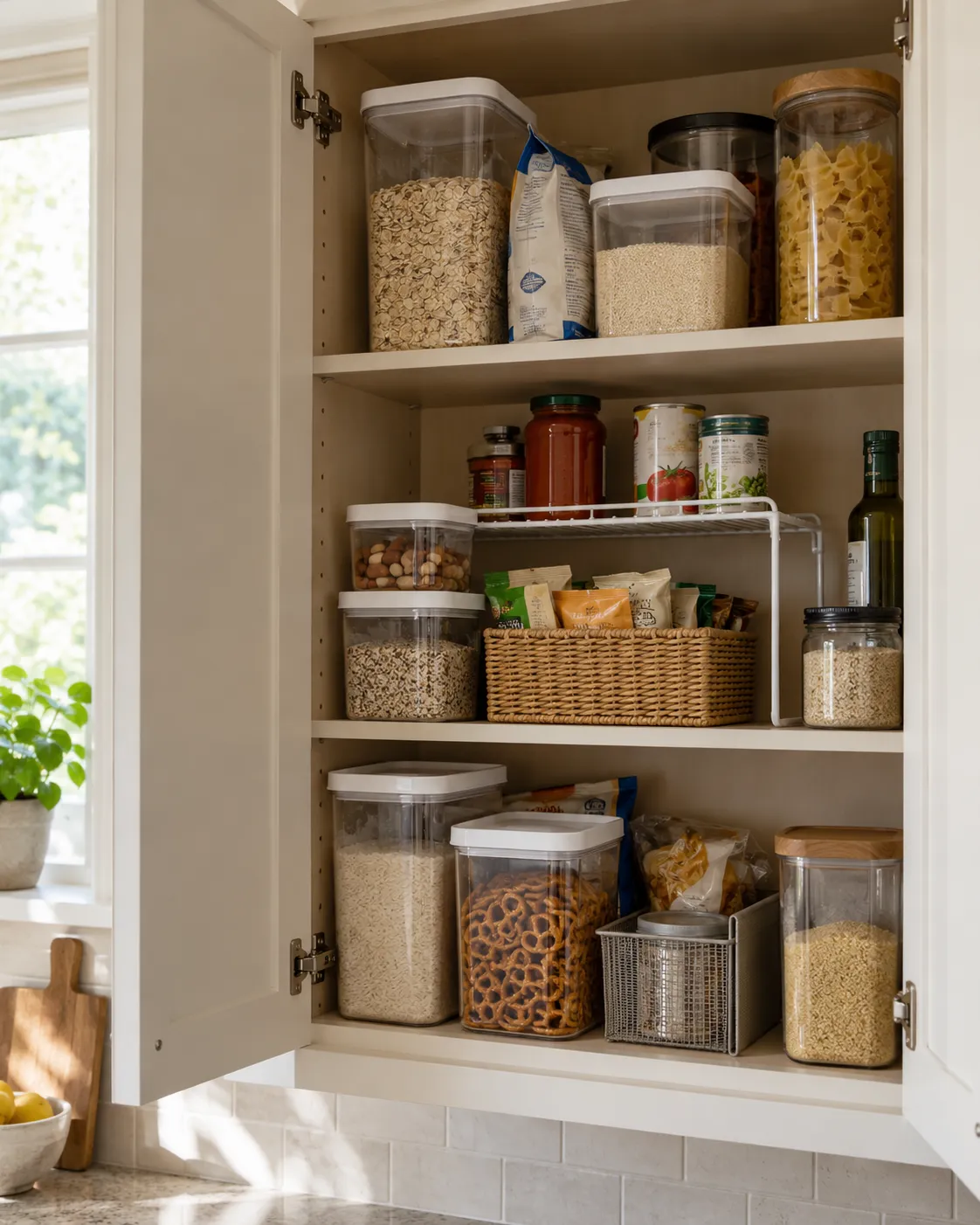
A separate pantry is useful, but many small apartments have only ordinary kitchen cabinets.
One cabinet can hold everyday dry food if the shelves are arranged around what needs to fit.
Use a basket for smaller packets and another suitable container for items that tend to fall over. A tiered organizer can sometimes make smaller jars easier to see toward the back.
There is no need to transfer every ingredient into matching glass containers.
Keep original storage information available, use food-safe containers where appropriate, and avoid overfilling the cabinet.
A shelf with a little space between groups is easier to use than one where every package has to be moved to reach the back.
Use the Area Under the Sink Carefully
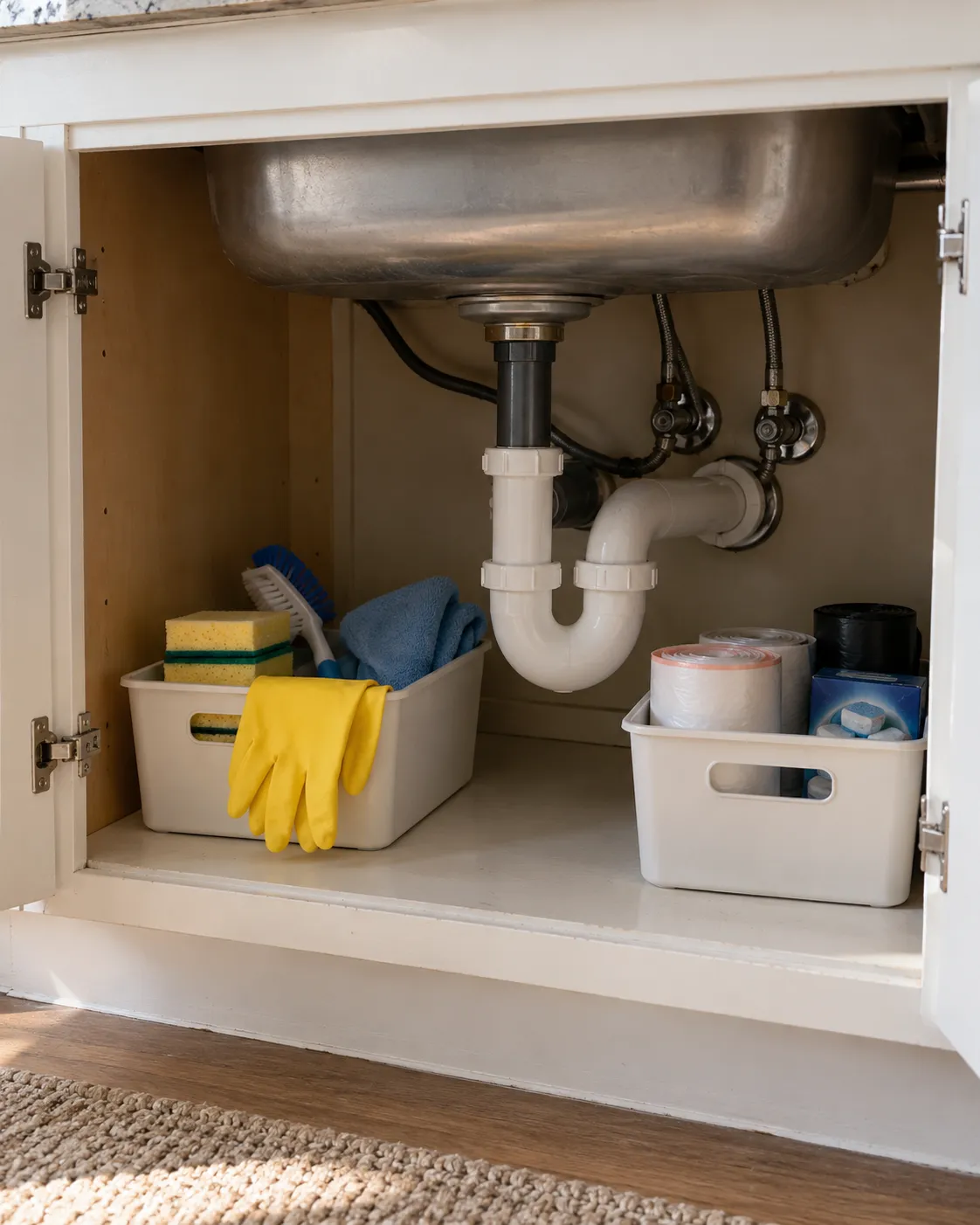
Under-sink cupboards often have useful space on either side of the plumbing.
Short, moisture-resistant bins can fit around pipes more easily than a large organizer designed for a perfectly rectangular cabinet.
Keep cleaning products securely stored according to their labels, away from food and out of children's reach.
Leave enough access to inspect the plumbing and deal with leaks.
A removable caddy may be useful for suitable cleaning essentials, provided it fits without pressing against the pipes.
Before adding anything, check for dampness and make sure the cabinet door still closes freely.
Add One Useful Wall Rail or Shelf
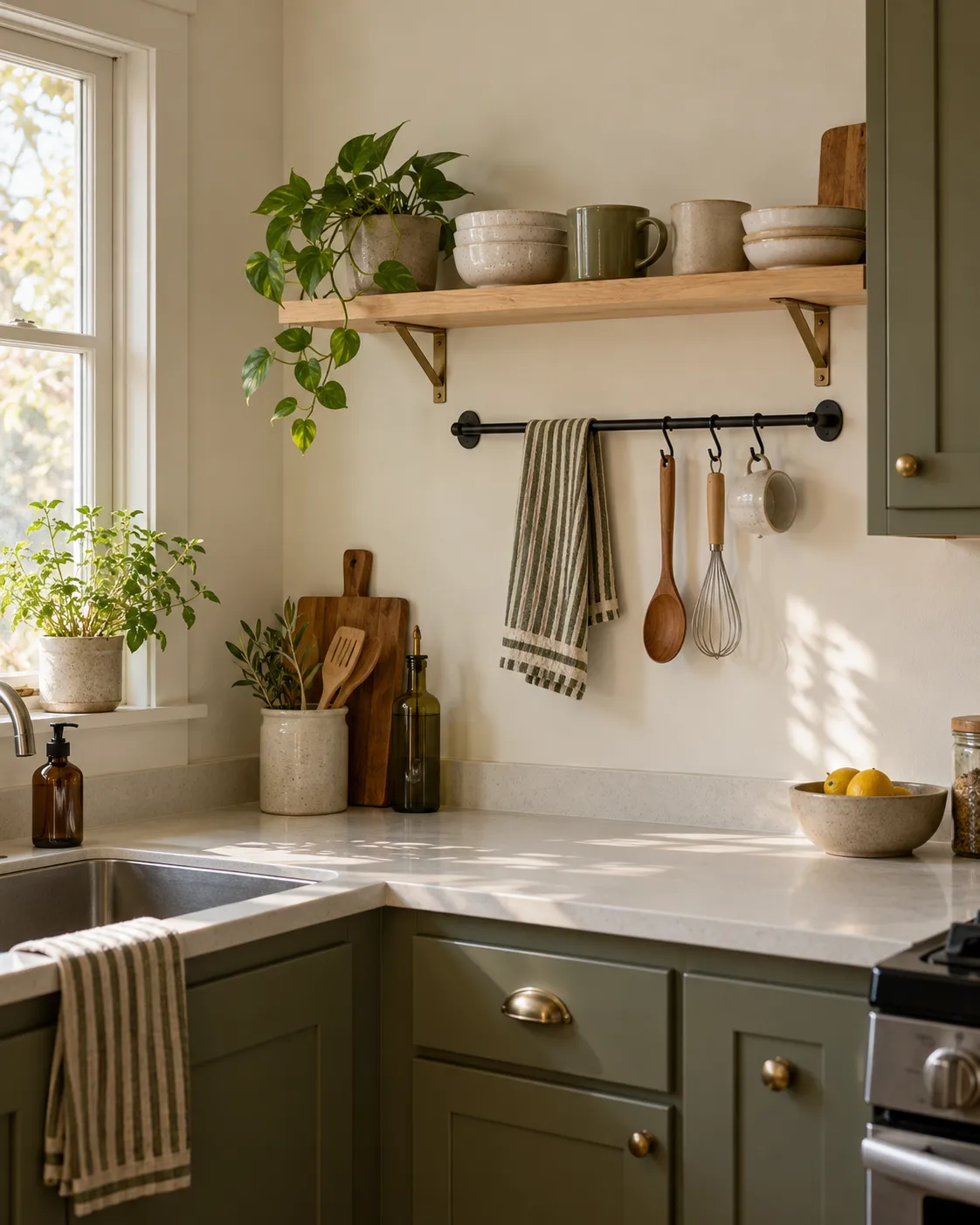
When drawers are limited, a wall rail or shallow shelf may offer storage without taking away another section of counter.
A rail can hold a towel and a few lightweight utensils. A small shelf may suit everyday mugs or other appropriately sized pieces.
Choose a position that is easy to reach but away from appliance heat and areas where hanging objects could interfere with cooking.
IKEA's guide to maximizing kitchen space shows more examples of compact wall storage and flexible kitchen shelving.
In a rental, check the lease before altering the walls. Follow the product's installation and weight requirements.
Add Freestanding Storage When Cabinets Are Limited
Some kitchens simply do not have enough built-in cupboards.
A compact freestanding cabinet or shelving unit can hold everyday dishes, pantry supplies, or lightweight accessories without a renovation.
Choose a piece that fits the available floor space and leaves the kitchen comfortable to move through.
Closed storage may suit appliances and miscellaneous supplies better than open shelves, especially when the room already has plenty of visible objects.
Tall furniture should be secured according to the manufacturer's instructions and the U.S. Consumer Product Safety Commission's Anchor It guidance.
For a narrow rental kitchen, a lower storage unit may be easier to accommodate than a tall tower.
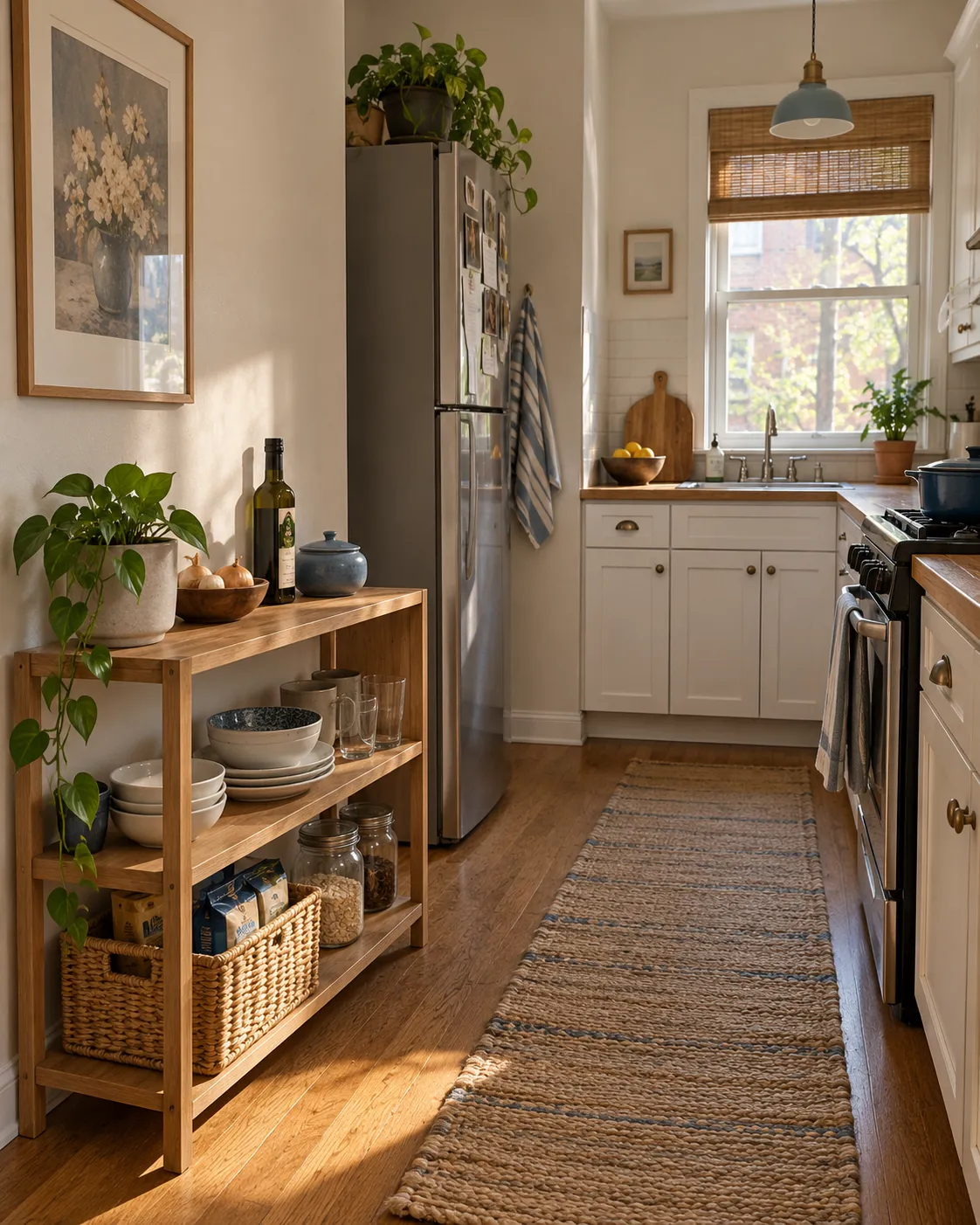
Find Small Kitchen Storage Solutions on a Budget
Before buying new organizers, look at what could work with the cabinets you already have.
An existing basket might fit the pantry better than the counter. A simple divider may stop baking sheets from falling against one another. A shelf riser can be worthwhile if a cupboard has plenty of unused height.
Start with the space that causes the most trouble.
Measure it, identify the problem, and choose one change that makes the contents easier to reach.
Buying matching organizers for every cabinet can become expensive, and the pieces may not fit the different spaces in a real kitchen.
Keep Storage From Taking Over the Kitchen
Extra cabinets and carts are helpful only when they leave enough room for cooking.
Check whether a new storage piece interferes with opening the dishwasher, refrigerator, or oven. Look at the main walkway from the entrance, too.
If the counters are still crowded after adding storage, the problem may be where everyday items are kept rather than a shortage of shelves.
Our small kitchen organization ideas guide focuses on clear prep counters, cabinet access, and everyday kitchen routines.
Once the practical storage works, our small kitchen decor ideas article can help with softer details such as rugs, lighting, natural wood, and a little color.
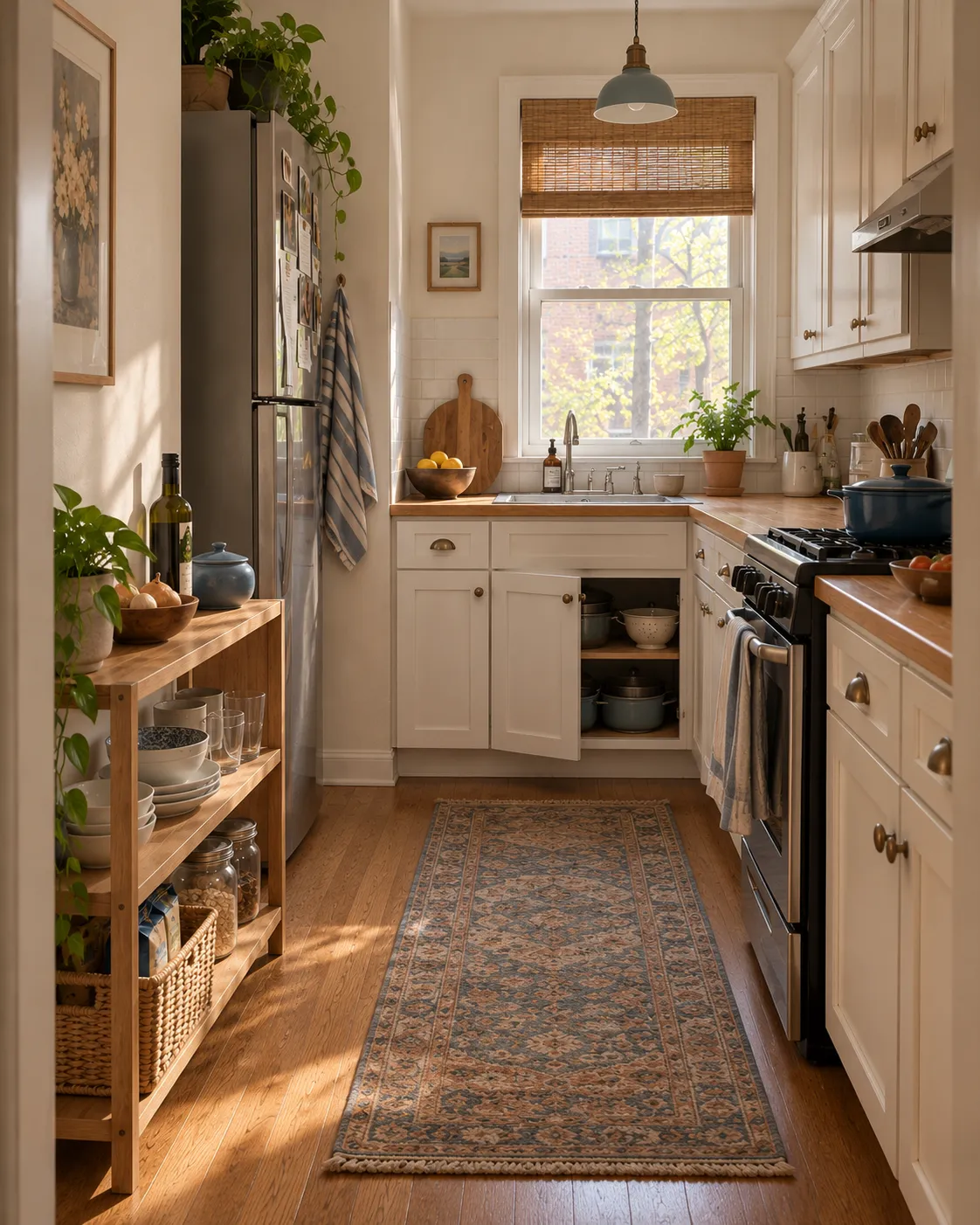
Small Kitchen Storage Mistakes to Avoid
Buying Organizers Without Measuring
Cabinet hinges, door openings, shelf supports, and pipes can reduce usable space.
Measure the inside of the cabinet and check the organizer's full dimensions.
Filling Every Narrow Gap
A gap beside an appliance may be important for ventilation or access.
A storage cart is useful only when it can be placed there safely and moved without obstruction.
Putting Heavy Items Too High
Keep heavy cookware and small appliances in sturdy, appropriately rated lower storage.
Reserve high shelves for lighter pieces that are used less frequently.
Using Too Much Open Storage
A wall covered in shelves, rails, baskets, and hooks may feel crowded even if the counters are clear.
Choose the storage that solves a practical problem rather than using every empty surface.
FAQ About Small Kitchen Storage Ideas
What are the best small kitchen storage ideas without cabinets?
Freestanding storage, a slim cart, and appropriately installed wall shelves can help when built-in cabinets are limited. Choose solutions that fit the room without blocking appliance access or walking space.
How can I add kitchen storage on a budget?
Begin with existing cabinets. A well-sized shelf riser, simple divider, or reused basket may solve a problem without replacing furniture. Measure before buying anything.
Where should I store appliances in a small kitchen?
Keep heavy appliances on stable, appropriately rated lower shelves or in cabinets. Store occasionally used equipment away from the main worktop when practical, and follow the manufacturer's instructions.
How can I store pots and pans in a small kitchen?
Use sturdy lower drawers or cabinets. Dividers can hold lids and baking sheets upright, while suitable pull-out organizers can make deep cupboards easier to reach.
Are these storage ideas suitable for renters?
Many are. Freestanding carts, shelf risers, removable baskets, and suitable cabinet organizers do not usually require permanent remodeling. Check the lease before modifying walls or cabinetry.
Start With the Cabinet That Bothers You Most
Open the cupboard where everything seems to get stuck behind something else.
There may be enough room for a shelf riser, an upright divider, or a shallow basket that makes better use of the space.
Start there. When that cabinet works better, it becomes easier to see whether the kitchen genuinely needs another piece of storage.
For more inspiration for compact homes, browse our small space decor collection.